
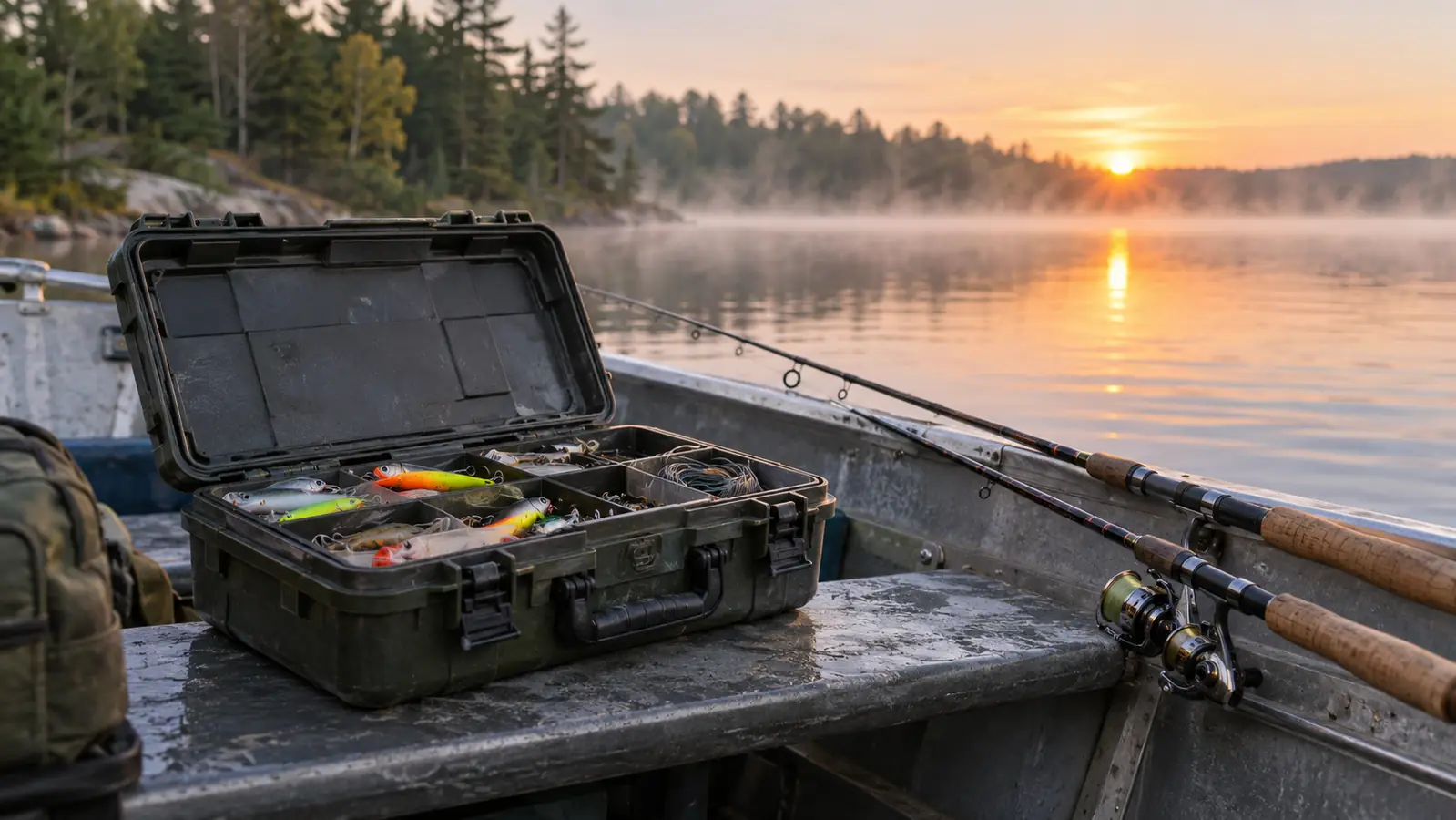
Here is the short answer. If you want one case that holds your trays, covers them, and makes the trip from truck to boat in one hand, get the Plano Angled Tackle System. If you already own a soft bag or a boat compartment and you only need trays that fit inside it, buy the KastKing utility boxes and skip the hard shell. That split held up across two seasons of fishing both ways, and everything below is the reasoning behind it.
My fishing is not glamorous. I supervise maintenance at a water treatment plant outside Spokane, and my free time goes to trout on small rivers and bass and walleye on a lake, from the bank or from a 14-foot aluminum boat with a small outboard. That kind of fishing asks a tackle box to do two jobs at once. It has to keep lures dry and sorted while the boat is moving, and it has to survive the ride in the back of a pickup without spilling jigs into the gravel. Plano built the Angled System for that exact pair of jobs. KastKing sells the other half of the idea: the trays themselves, without the case around them.
| Plano Angled Tackle System | KastKing Utility Tackle Boxes | |
|---|---|---|
| What you get | One hard case plus three 3560 Stowaway boxes that ride inside it | Utility trays on their own, usually bought as a set |
| Footprint when closed | 18 by 9.5 by 11 inches, one object you can set behind a seat | Whatever the loose trays add up to, unless you bag them |
| Rain and spray | Hard shell with DuraView covers and doors over the trays | Open-top trays, water gets in when a lid is off |
| Carrying to the water | Handle, utility pocket, about 7 pounds loaded | Carried by hand or stuffed into a separate bag |
| Reading a tray at a glance | DuraView covers help, but trays sit at an angle and show one at a time | Clear, flat trays you can spread out and read all at once |
| Adding storage later | Three boxes, swap the load for a different species | Add a tray at a time as your tackle changes |
| Bank fishing and wading | More case than you want to walk a mile with | One tray in a vest pocket does the job |
| Life in a boat locker | Hard shell takes weight stacked on top of it | Trays stay put if the compartment fits them |
| Best for | Anglers who want one case holding everything | Anglers who already own a bag and need more trays |
Notice the pattern in that table, because it is the honest version. Plano takes the rows about protection, carrying, and keeping a tray dry. KastKing takes the rows about visibility, modularity, and fishing light. Both win something, which is what I would tell you in the aisle at the sporting goods store if you asked me which one to grab.
What the Plano Angled System Actually Is
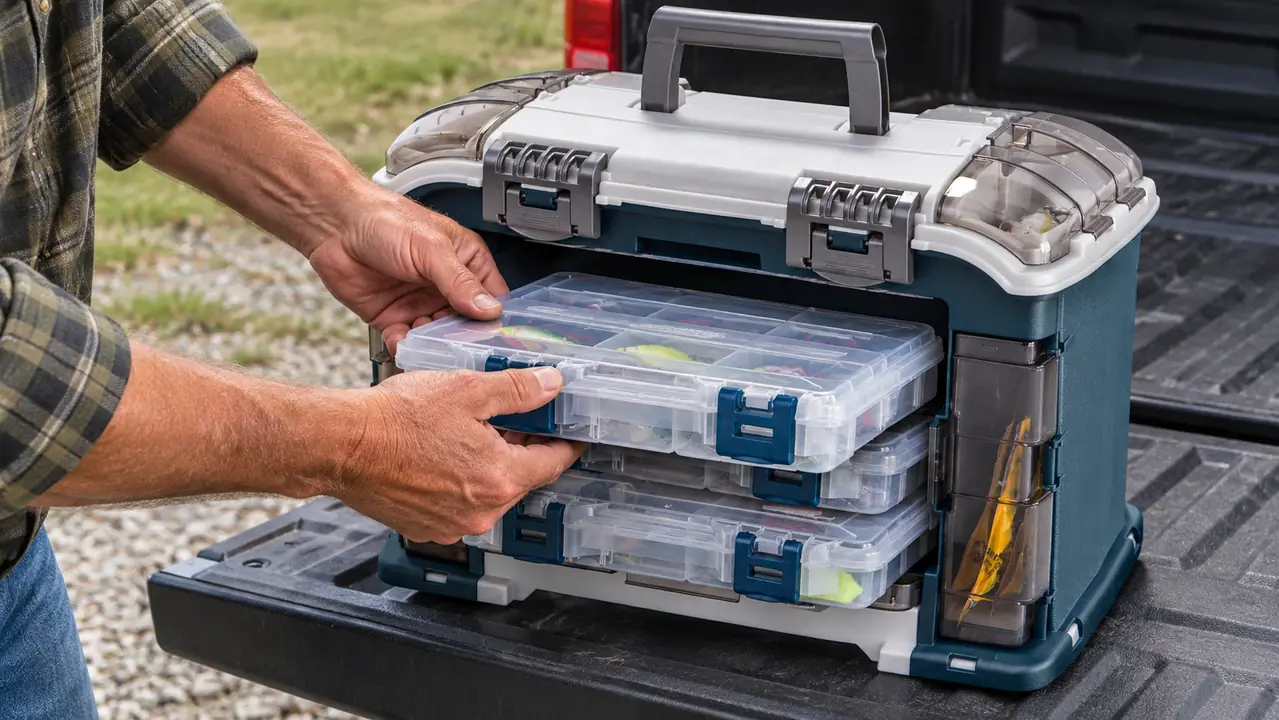
It is one hard case, sized at 18 inches long, 9.5 inches wide, and 11 inches tall, listed at 7 pounds. Inside are three 3560 Stowaway boxes. The main compartment holds those boxes at a 15 degree angle rather than flat, and DuraView covers and doors close over them. There is a utility pocket for the loose odds and ends. No wheels. This is a case you carry.
The angle is the feature people dismiss until they use it. In a flat box you lift the tray out to see the back row of jigs. In the Angled System the trays sit tilted toward the opening, so when you flip the door you are looking down into the compartments instead of at a lid. On the boat bench, with a rod in one hand, that saves a set down and a pick up every time I change a lure. Forty lure changes in a morning is not an unusual number for me. It adds up.
The covers and doors earn their keep in weather. I have fished in drizzle that turned to rain inside twenty minutes, and the difference between a covered compartment and an open tray is a dry set of marabou jigs versus a wet wad of feathers that has to be laid out on the dash to dry. The shell is hard, and it has taken the treatment a case gets in a truck bed: sliding, stacking, a cooler set on top of it, and one memorable drop off the tailgate onto asphalt. It is still square.
Eighteen inches by nine and a half by eleven, seven pounds loaded, and it lives behind the truck seat and under the boat bench without wandering. That is the whole argument for it.
Where Plano Wins
One case, one trip. That sounds too simple to matter until you have done the other version. With loose trays, a morning starts with a bag, a couple of boxes, a pouch of soft plastics, and whatever else did not fit, and every one of those has to get from the truck to the boat and back again. The Angled System collapses that into a single hard case with a handle. I grab it, I walk, I open it, I fish. At the end of the day I close it and walk back. Nothing gets left on the tailgate because nothing got separated in the first place.
The three 3560 Stowaway boxes are a quiet advantage over the long run. Trays wear out. Compartment dividers bend, hinges crack, and a box that has been dropped on rocks eventually stops closing flush. When that happens with the Angled System, I replace one Stowaway box and keep the case. It also means I can run a different load for different water without buying a second case: bass in one, trout in another, and the third for the walleye gear I only pull out on the lake. Same shell every trip.
Where KastKing Wins
Buying exactly what you need is real. The KastKing boxes are utility trays, and the appeal of that is you add one as your tackle changes instead of committing to a fixed case with a fixed number of slots. If your soft bag already has a sleeve that fits them, or your boat has a locker that swallows a stack of trays, adding trays is the sensible move. You are not paying for a shell you do not need, and you are not reorganizing your tackle into a shape somebody else designed.
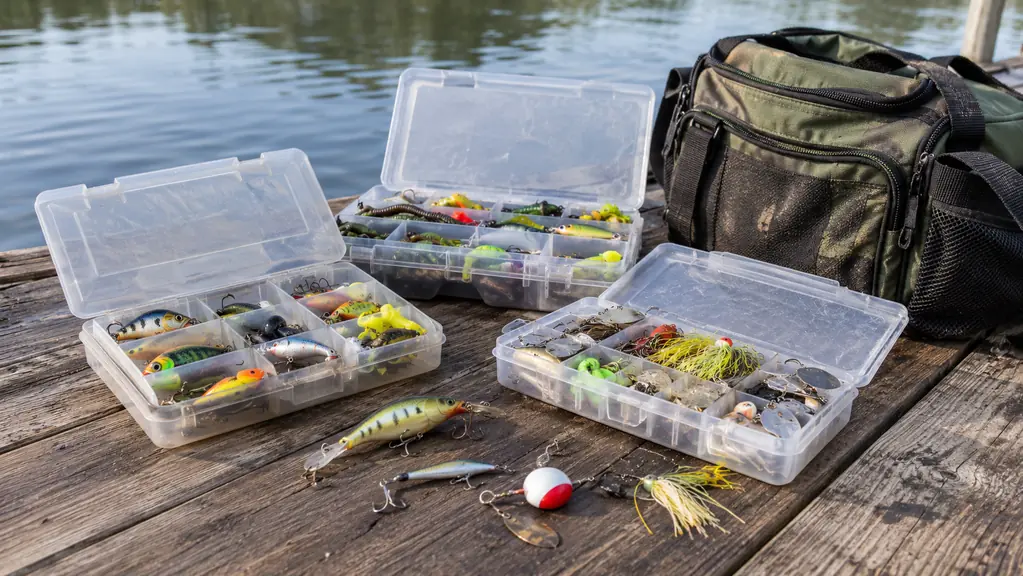
Visibility is the other one, and it is not small. Clear trays laid flat on the boat bench let me read a whole box at a glance, and I can spread three of them out and see everything I own in one sweep. The Angled System trades some of that for protection and tidiness. When I am sitting on a bucket on the bank with one rod and a vest, I do not want a hard case at all. A single tray with the jigs I plan to throw fits where a case cannot go, and that is a genuine win for the tray-only route.
One Case, Three Trays, One Trip to the Water
The Plano Angled Tackle System holds three 3560 Stowaway boxes at a 15 degree angle under DuraView covers, inside a hard shell sized 18 by 9.5 by 11 inches. If you are tired of carrying three things down to the boat, this replaces all three.
Amazon Check Today's Price on Amazon →How I Tested Both
I did not set up a lab. I did what I normally do, twice, and paid attention. The Plano case has ridden behind the seat of my pickup and under the bench of the aluminum boat since early last spring. It has been through river trips in the rain, lake trips in August heat, and one stretch of winter where it sat in the garage with the ice gear because I forgot to bring it in. The KastKing trays I ran separately, loose in a soft bag, so the comparison of tray-only storage was fair.
The loadout was the same in both directions: two trays of bass jigs and hooks, one tray of trout spinners and small spoons, plus soft plastics in the utility pocket. The loaded case came in around the listed 7 pounds, which is light enough to carry a half mile up a river bank without thinking hard about it and heavy enough that it does not skate across the bench when the wind picks up on the lake. The trays alone weigh almost nothing, which is exactly why they move around.
Nothing broke. That is not a dramatic result, but it is the honest one. The hard case picked up a couple of scuffs on the corners. One Stowaway divider is looser than it was when new because I jammed a larger crankbait where it did not belong. The loose trays in the soft bag picked up scratches on the lids and one cracked corner from being stacked under a bag full of lead. Both routes survived. One just needed more hands.
The 15 Degree Angle, Explained
A 15 degree tilt sounds like a number invented for a box label. Here is what it means in practice. The boxes do not lie flat in the compartment. They are propped so the front edge sits lower than the back edge, which means the compartments face up and slightly toward you when the door is open. You are not looking at a tray edge-on from above. On a boat bench, where the case sits below eye level, that difference is the entire reason I can pick a jig out without lifting a box out first.
There is a tradeoff, and I will name it. Tilted trays are harder to read all at once. Flat on a bench, three open trays give you a full inventory in one glance. Tilted inside a case, you look at one tray at a time through its own door. The Angled System is faster for grabbing the lure you already know you want. Loose flat trays are faster for deciding what you want in the first place. Those are different jobs, and it is fine for a product to pick one.
The Small Annoyances on Both
On the Plano side, the case is 11 inches tall and that is taller than a flat tray bag. It fits under the bench of my 14-foot boat and behind the truck seat, but it would not fit in the shallow compartment of a smaller boat, and I have watched people try to make it. Seven pounds loaded is light in the hand and noticeable on a long walk in. If I am hiking a mile to a river bend, I take one tray in the vest, not the case.
On the KastKing side, the annoyances are all about what is missing rather than what is wrong. Loose trays have no handle, no latch holding the set together, and no protection from rain. I have had a tray slide off a bench into the bottom of the boat and dump a hundred split shot into the bilge. That is not a defect in the tray. It is a defect in my decision to use a tray without a box around it.
Who Should Buy Which
Buy the Plano Angled Tackle System if your tackle lives in one place and moves with you. Bank to truck to boat, boat back to truck, truck to garage. If you have stood at a tailgate with both hands full and one more thing to grab, this is the case that removes that problem. It also suits anyone who fishes in rain and does not want to dry out jigs afterward, or anyone whose trays get stacked under other gear in a boat locker and needs a hard shell to take the weight.
Buy the KastKing utility boxes if you already have a system and only need more trays inside it. A soft bag with a sleeve for boxes, a boat with built-in compartments, a vest with a big front pocket. It also makes sense if you fish light and rarely, or if you want to build a small tray for one species and one season without committing to a full case. And it makes sense if you have a grown kid who keeps borrowing your tackle, because a tray is easier to hand over than a whole case.
Stop Carrying Three Things Down to the Boat
One hard case, three 3560 Stowaway boxes presented at a 15 degree angle, DuraView covers, and a utility pocket for the loose stuff. Sized 18 by 9.5 by 11 inches so it fits behind a truck seat and under a boat bench.
Amazon Check Today's Price on Amazon →What I Tell People at the Ramp
The question I get is usually framed as which one is better, and I try to reframe it. Ask yourself what happens to your tackle between trips. If the answer is that it stays in the boat or the truck, covered, then a hard case earns its keep. If the answer is that it comes inside, gets sorted on the kitchen table, and goes into a bag the night before, then trays are the right unit and a case is one more thing to store in the garage. The storage you already have decides this more than the box does.
One more thing, and it is the reason I landed on the Plano side. I do not lose tackle because a tray fails. I lose it because something gets set down and left behind. A single case with a handle is one object to keep track of. Three loose trays and a bag are four. That arithmetic is boring and it is the actual reason I carry the case, more than the angle or the covers or any spec printed on the side of the box.