
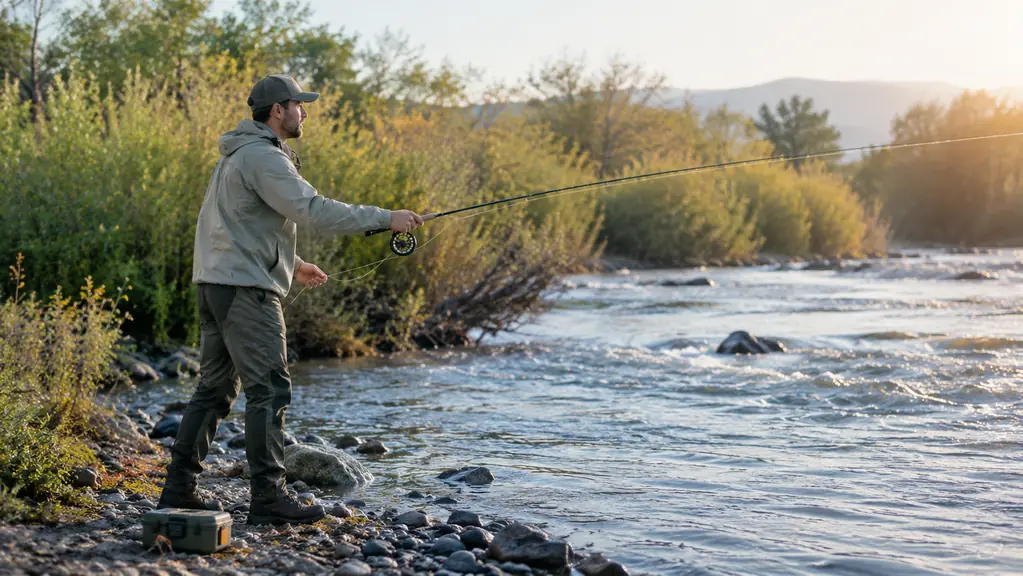
Most of the bank water I fish is not polite. It is a culvert mouth under a county road, a gravel bar the size of a driveway, a gap in the willows where a trout is holding. You get one clean cast or you get nothing, and whatever you carry in has to come back out on your shoulder at the end of the day. I have hauled long rods through that country for years and I still do when the water opens up. But the rod that lives behind my truck seat now is a five-foot two-piece spinning combo, and it earns that spot more weeks than not.
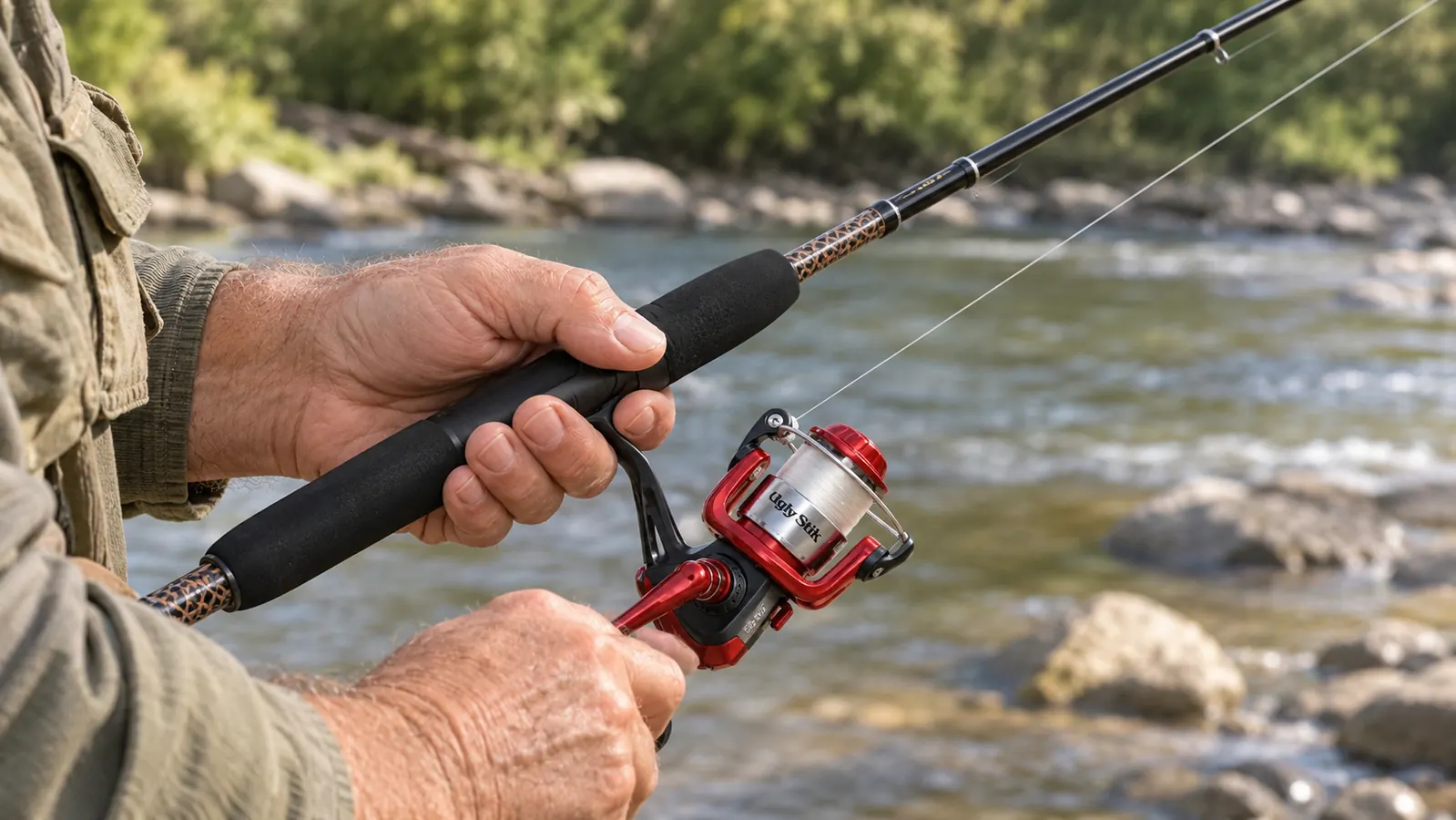
The one I keep reaching for is the Ugly Stik 5' Complete Spinning Kit, which is exactly what the name says: a five-foot two-piece rod and a matching spinning reel in one box. Ugly Tech construction, clear tip design, light power, a ten-pound line rating, and about sixteen ounces in the hand for the pair. It is not a fancy rig and it is not built for the water a boat opens up. It is built for the water you can walk to, which is most of the water I actually fish between April and October.
The rod that fits behind the seat and still reaches the seam
Five feet, two pieces, one box. The Ugly Stik kit is the spare that turned into my primary on foot-access water.
Amazon Check Today's Price on Amazon →Why a short spinning combo fits bank water
A five-foot rod casts into gaps a longer rod cannot
Walk any public bank in the Inland Northwest and you find the same three spots: the culvert mouth, the willow gap, and the seam where current breaks over a rock. A long rod needs room behind it to load. A five-footer needs almost none. I can flip a bait under a branch, drop it beside a boulder, and be fishing while somebody with a seven-and-a-half footer is still hunting for a lane. It costs me distance on open water. I do not care about distance on water I cannot reach anyway.
Two pieces ride behind the truck seat instead of across the cab
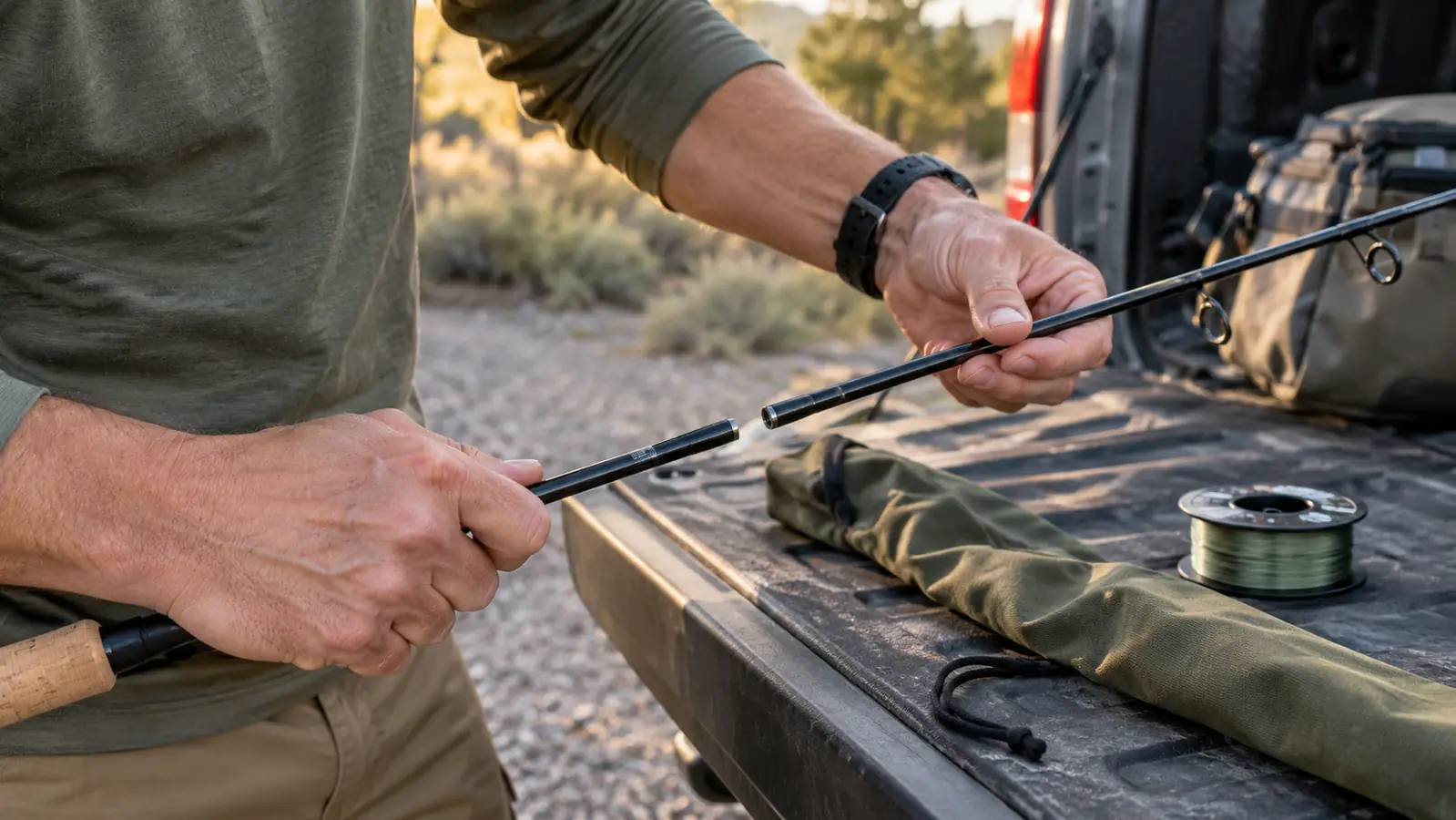
The rod comes apart in two, so it goes inside the cab instead of riding in the bed where sun and tailgate get at it. Mine lives behind the seat with a rag wrapped around the reel. That sounds like a small thing until you add up how many trips start with a twenty-minute detour back to the house for gear. If the rod is already in the truck, you fish the two hours after work instead of planning around them.
The light power rating is built around ten-pound line
The rod is rated light and the factory line rating is ten pounds, so it is meant to be loaded with light line and light lures. That pairing is the whole point on bank water. Over-line it and you lose the easy loading that makes a short rod worth carrying. I run six-pound on the spool and let the rod do the work. It throws a small spinner far enough and still has enough spine to turn a fish away from a brush pile before it wraps you.
The spool holds 240 yards of six-pound mono
Line capacity is 240/6, which means 240 yards of six-pound monofilament, and monofilament is what this reel is set up for. On bank water you are rarely past forty yards, so a fish is not going to spool you. I strip and respool every spring because mono takes a set and goes brittle sitting in a hot truck. That is ten minutes and a spool of line, and it is the single biggest thing you can do to keep a plain combo casting well.
Either hand can work the crank
The reel is ambidextrous, so the handle can go on the side you actually crank with. That matters more than people admit. I grew up cranking left and I have handed this combo to a right-hand friend without either of us fighting it. When Carol comes along or Jake borrows a rod, the switch means everybody fishes instead of standing on the bank watching.
A short rod costs you distance. It buys you the casts you can actually make from a brushy bank, and that trade favors the bank every time.
Sixteen ounces does not wear your arm out by noon
Rod and reel together come in at sixteen ounces. Walk a mile of riverbank with a heavier setup and you feel it in the shoulder before lunch. That is the first half of it. The second half is that a light combo is easier to fish slow. When your arm is not tired you keep a lure working properly instead of just reeling it back to the gravel.
A 5.2:1 gear ratio covers both jobs
The gearbox ratio is 5.2, which is the middle of the road, and the middle of the road is where bank fishing lives. It picks up slack fast enough to set a hook on a fish that took at the end of a long cast, and it is slow enough to crank a small crankbait without tearing it straight out of the strike zone. A faster reel would be nicer for burning a spinnerbait across a flat. You are not doing much of that from the rocks.
The clear tip shows a bite you would feel a second too late
The rod carries Ugly Tech construction with a clear tip design, and that tip is doing real work. When a trout picks up a bait and comes toward you, the line goes slack and you feel nothing at all. The tip folds before anything reaches your hand. I have caught more fish off that visual than off any hookset instinct I own. Watch the tip, not the water. It is the cheapest bite indicator you will ever carry.
It is rated for the freshwater fish a bank actually holds
Target species on this kit is freshwater fish, and that is honest about what it is. Trout in the small rivers, bass and walleye on the lakes, panfish wherever you find them. It will land a two-pound bass all day long and a decent walleye without drama. What it will not do is horse a twenty-pound fish out of heavy current, and no light rod will. Buy it for the fish you catch every week, not the one you catch once a decade.
A manufacturer's warranty backs the rig you will abuse
It carries a manufacturer's warranty, and it is the kind of rig that gets used hard because it is the one in the truck. Set down on gravel. Leaned against a tailgate. Rained on and put away wet. That is the honest case for a combo at this level. Not that it is the finest rod ever built, but that it is the one you will not baby, and the one you can replace without a family meeting the day it finally gives out.
What I'd Skip
I would skip braid on this reel and I would skip heavy lures. It is a freshwater spinning reel built around six to ten pound monofilament, and it does fine work with a small crankbait, a spinner, or a hook and a worm. It is not the place to hang a big swimbait or a heavy topwater plug, and heavy line will punish you with short, sloppy casts. Keep lures light enough to load a light-power rod and the reel will last longer than you expect.
The other thing I would skip is the idea that you need a second combo before you have fished this one. Take it out four or five evenings, respool once, and see whether the five-foot length costs you fish where you actually fish. If your water is wide open and a long cast is the whole game, this is not your rod and no list of reasons will change that. Plenty of my fishing is exactly that, and those days I still carry the long rod.
Start with the water you can walk to
One box, a five-foot two-piece rod, and a reel rated for the fish most bank anglers actually catch. Load it with six-pound mono and go.
Amazon Check Today's Price on Amazon →