
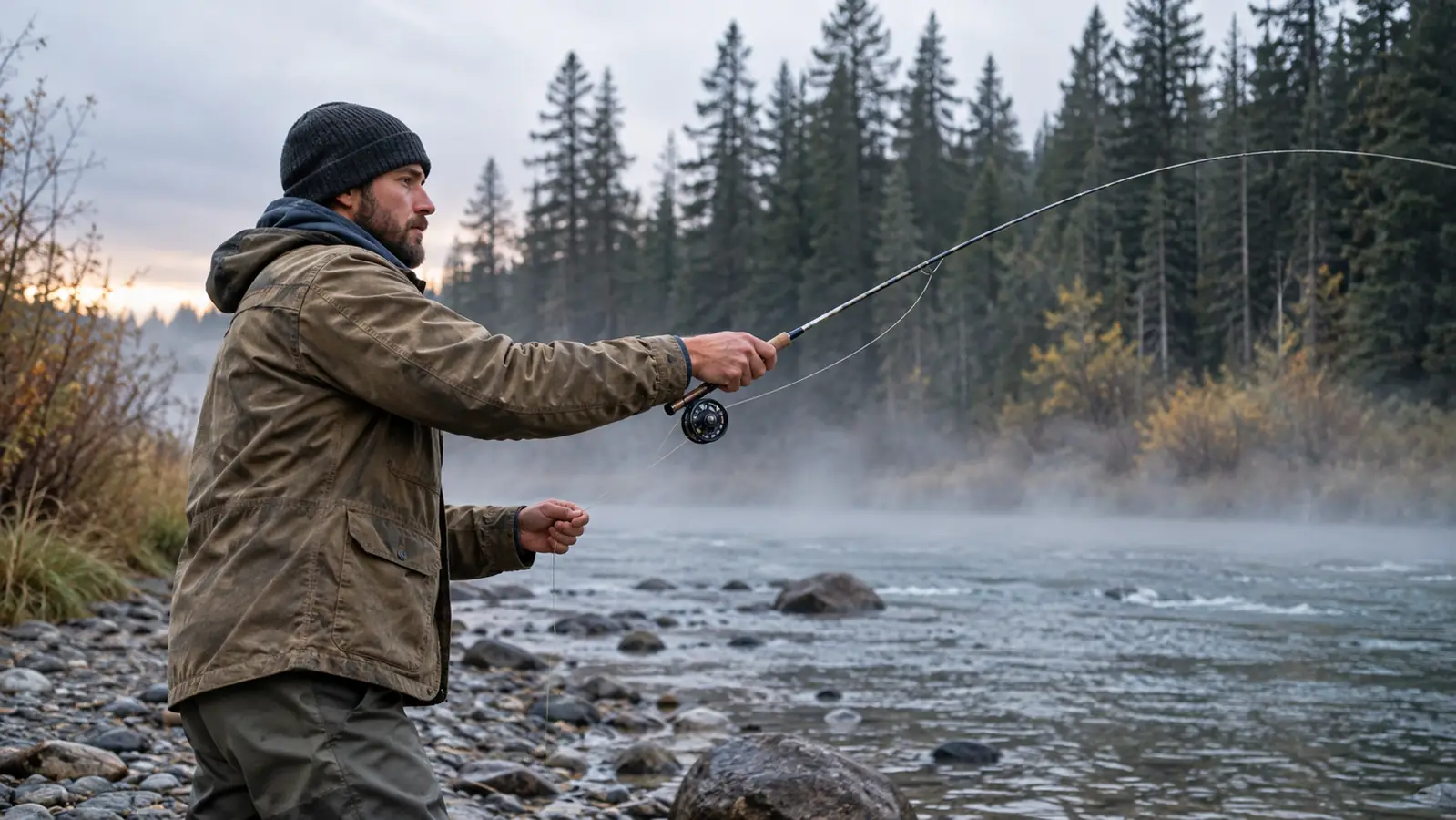
Every April I tell myself I am not buying another rod. Then the small rivers drop back into shape, the trout stack up in the tailouts, and I remember my good rod is already rigged for something else. That is how a five-foot Ugly Stik spinning combo ended up riding in the bed of my pickup from the middle of April through the first week of November, and why I have more to say about it than a person probably should about a rod this size.
I have bought the shrink-wrapped combos before. The kind where the reel handle has play in it before you ever tie on a lure, and the guides sit crooked enough that you can spot it from the truck. The Ugly Stik kit is not that. It is also not a custom rod, and I am not going to sit here and tell you it is. What it is, is a light-power, two-piece, five-foot spinning outfit that weighs about 16 ounces with the reel on it, comes spooled with monofilament, and did not let me down in a season where I fished it harder than I planned to.
The Quick Verdict
A short, light, two-piece spinning combo that handles trout and panfish in tight water and stows behind a truck seat. The rod is the reason to buy it. The reel is the reason you will eventually replace one half of it.
Amazon Check Today's Price →The rod that lives behind my truck seat, not the one I baby
Five feet, two pieces, light power, 16 ounces with the reel on it. If your water is small and your bank is brushy, this is the outfit I would hand you and not think twice about.
Amazon Check Today's Price on Amazon →How I've Used It
Two kinds of water, most weeks. The small trout rivers east of Spokane, where a cast is mostly a flip under alder branches and a long rod is a liability. And a bass lake I have fished since the 1990s out of a 14-foot aluminum boat with a small outboard on the back.
On the rivers, the five-foot length is the whole reason the rod earns its spot. I can walk a brushy bank with it in one hand and a small box of spinners in the other, and I can flip a cast into a pocket the size of a trash can lid without hanging the tip in the branches overhead. The two-piece design matters more than I expected. When I am done I break it down and it goes behind the truck seat, instead of riding in the bed where the sun and the gravel get at everything.
On the boat it is the rod I keep rigged for when the bass go quiet and I want to downsize. Carol comes along on the lake trips most summers, and she has claimed it more than once because it is light enough that she can cast it all afternoon without complaining about her shoulder. I have also used it in the fall on the same rivers for the last hour of daylight, fishing a small spinner along a cut bank, which is the least technical fishing I do and the kind I enjoy most.
One morning in late April I walked in about three quarters of a mile to a stretch I fish every spring, and the water was still high and the color of weak coffee. I fished a spinner for forty minutes without a touch. I downsized the lure and finally got a hit right at the edge of a fallen log that reached out into the current. The short rod is what made that fish possible. I could reach the rod tip out over the log and drop the lure down the far side without wading, and the bank on my side would not have allowed a wade anyway. I took three fish off that log in the next hour, all of them small, all of them worth the walk.
How the Rod Behaves With a Fish On
The rod is rated light power, and it fishes like it. The tip section is clear, which Ugly Stik builds in on purpose, and it does something useful: you can see a trout pick up a spinner before you feel it. That sounds like a small thing until you have fished a river where half your bites are a tick you would otherwise miss. I set the hook on more fish this season than I did the year before with a stiffer rod, and I credit the tip more than my reflexes.
The blank is what Ugly Stik calls Ugly Tech construction, and whatever is inside it, the bend is progressive. A ten-inch hatchery rainbow puts a bend in the upper third. A sixteen-inch wild fish gets into the middle of the rod, and the rod keeps giving instead of locking up. I landed a rainbow just shy of nineteen inches on it in June, in current, and the rod did not feel like it was at the edge of what it could do. The reel was closer to its limit than the rod was.
Where light power shows its ceiling is hooksets in heavy cover and fish with shoulders. I have not landed a bass over four pounds on this rod, and I would not plan to. You can get a big fish in on light tackle if the water lets you, but if there is a logjam and current, five feet of light rod is not the tool for turning a fish away from it. I lost one in July that I never saw, probably a decent bass, that took a spinner under a dock and had me beat in about four seconds.
By June I had a routine. I fished the last hour and a half of light, starting upstream and walking down, and the clear tip earned that hour for me. There is a stretch where the current slides along a grass bank and the fish sit in maybe eighteen inches of water. You see the take before you feel it, a pale shape turning on the lure. With a stiffer tip I would have felt nothing until the fish was already gone, and I know that because I have fished that bank with a stiffer rod. Over three evenings in June I hooked five fish out of that one stretch and landed four. I knew about the fifth one only because I saw it.
The Reel Is the Part I'd Upgrade Later
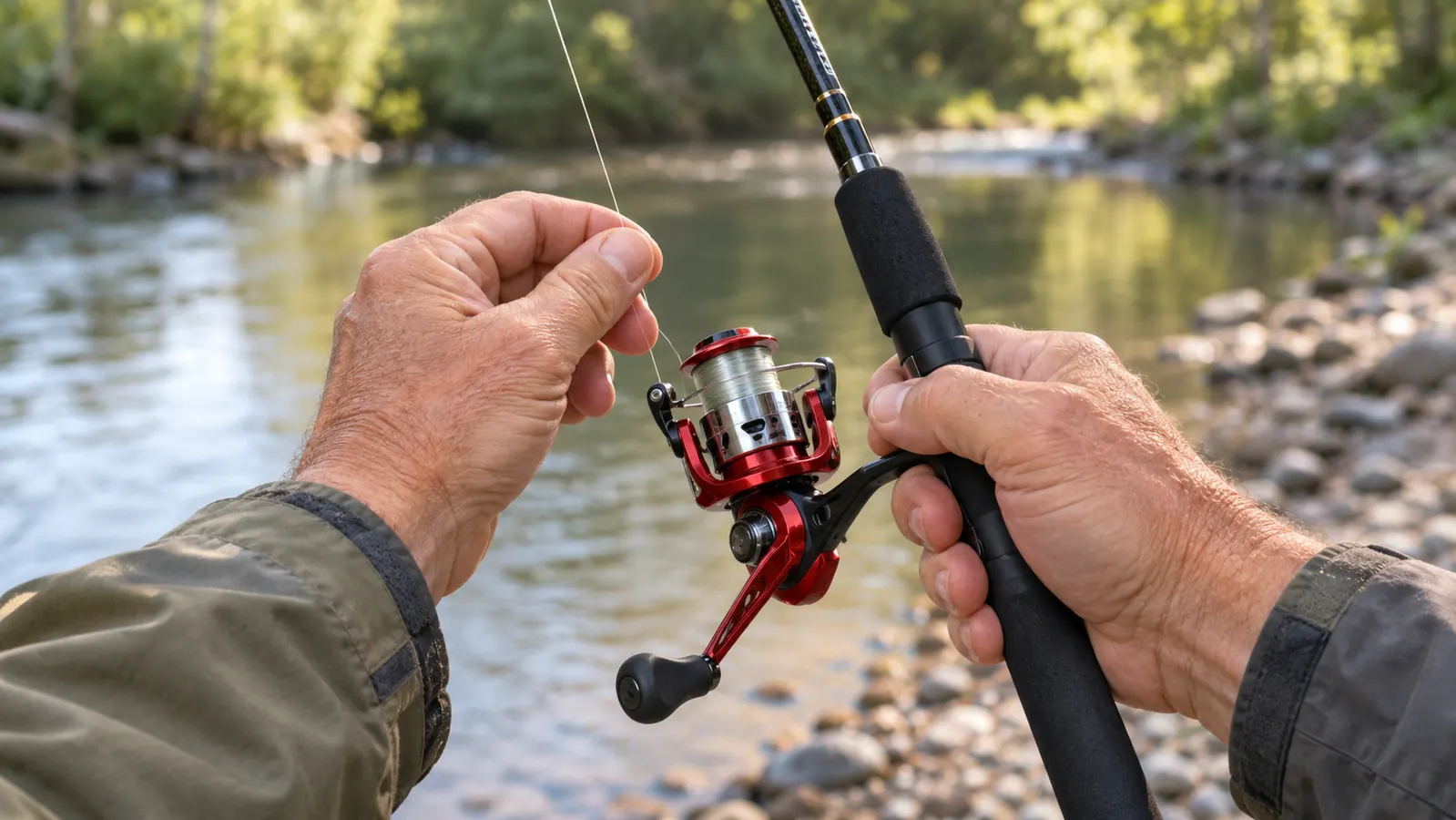
The kit includes a spinning reel, and it is a perfectly usable reel. It is also the reason this is a combo recommendation and not just a rod recommendation. The gear ratio is 5.2:1, which is a middle-of-the-road retrieve. That suits the way I fish it, small spinners and a slow steady crank along a cut bank, and it is a touch slow if you like burning a bait back to the boat.
Hand orientation is ambidextrous, so it does not matter which side you crank on. That is a bigger deal in a household than it sounds. Carol cranks with the opposite hand I do, and neither of us had to think about it or swap anything around.
The spool takes 240 yards of 6-pound monofilament, and the rod is rated for line up to 10 pounds. I ran 6-pound mono all season because that is what the water wanted. When a good fish pulls, line comes off the spool and you get it back when you turn the handle, and the whole thing feels about how a combo reel at this level feels: serviceable, not silky. That is the trade. If the reel ever quits on me, I will move a better one onto this blank and keep fishing the rod, because the rod is the part worth keeping.
Two things I noticed about the reel over the season. The drag is smooth enough on a two-pound fish and gets grabby if you crank it down hard, which I stopped doing after the first trip. And the line lay is even enough that I never got a wind knot, which I cannot say for every reel I have owned. I rinse it with fresh water after every lake trip, because that lake leaves a mineral film on everything, and I put a drop of oil on the handle knob twice all season. Nothing failed, nothing seized, and nothing started to grind.
Where Five Feet Helps and Where It Hurts
Five feet is short for a spinning rod, and short cuts both ways. It is accurate. When you are flipping under brush or dropping a cast between two rocks, a short rod puts the lure where you are looking, and it does it with less arm movement. If you fish from a bank with trees behind you, that matters on every single cast.
It is also short on distance. On the lake, into a light wind, throwing a light lure, I am giving up real ground to a longer rod. Not the end of the world from a boat where you can move to the fish. On a wide river where the fish sit on the far seam, you will feel the difference in your shoulder by the end of the morning.
The other cost is leverage. A short rod gives you less to fight with. On a light-power five-foot rod, a two-pound fish is fun and a five-pound fish is a project. I knew that going in, and I bought it anyway, because ninety percent of my fishing is not about five-pound fish. If you are chasing walleye or big bass, treat this as a second rod and not a first one.
I paced off some casts one afternoon on a gravel bar with no wind, mostly out of curiosity. A quarter-ounce spinner went about sixty-five feet on a normal cast, and maybe seventy-five when I really leaned into it. My longer rod puts the same lure out at ninety to a hundred feet without trying. That is a real difference on wide water and close to meaningless in a pocket. The other thing I noticed is that the short rod is easier to cast accurately while sitting down, which is how I fish from the boat seat when the wind is pushing me along.
Rigging It and What Held Up
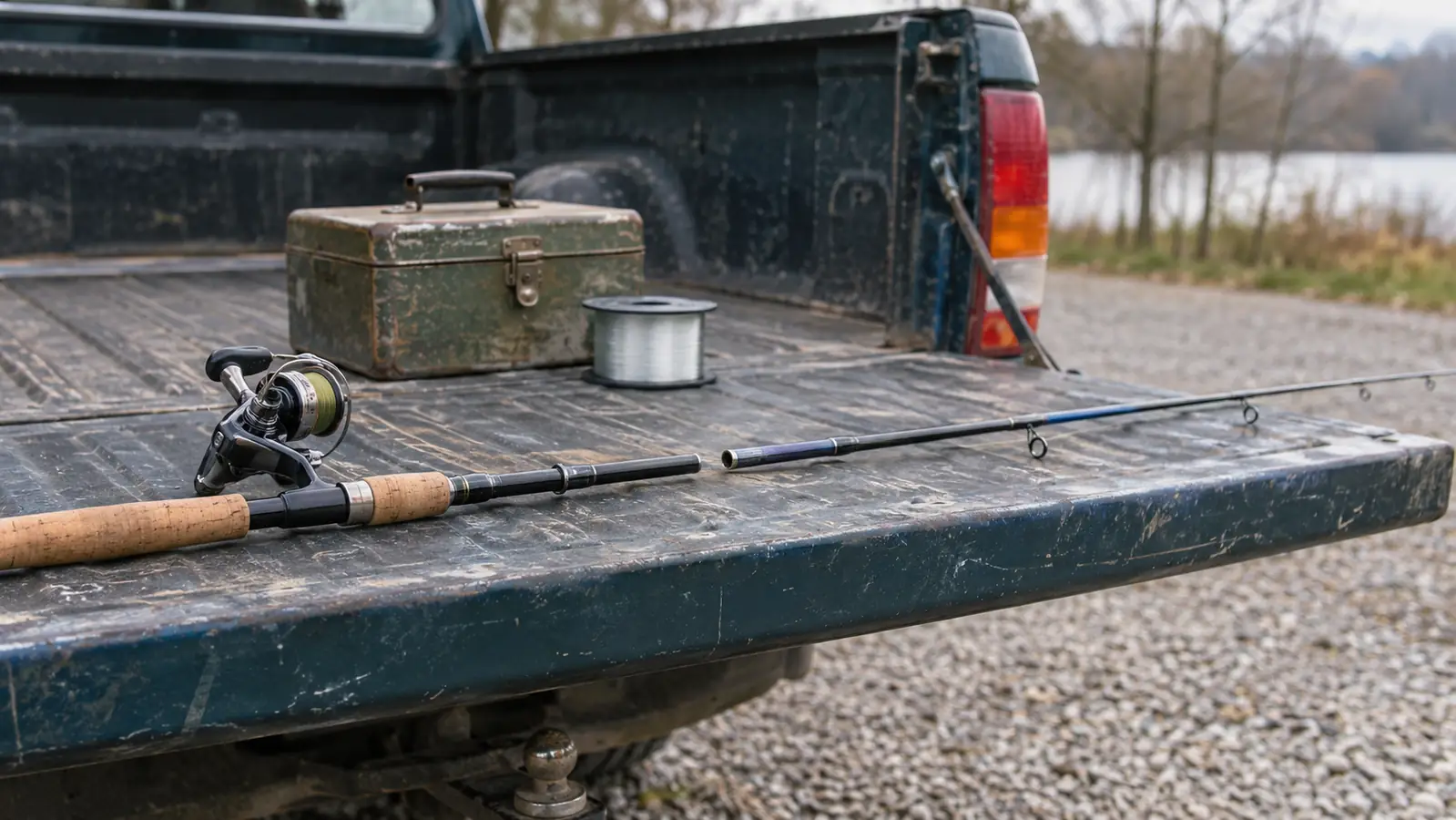
I spooled it with 6-pound monofilament and left it there. Mono is what the rod and reel are rated around, it is forgiving on light line, and it is easy to swap out midseason when it takes a set. I re-spooled once, in July, and I probably should have done it in June.
Most of the season it wore a small inline spinner, a light spoon, or a piece of worm under a split shot. That is the range this outfit is built for. It is not a baitcaster, it is not a flipping stick, and it is not going to throw a big swimbait anywhere you want it to go. It will put a quarter-ounce spinner exactly where you look, all day, from a bank.
The wear items held up. The guides are still tight, the two-piece joint still seats with a firm push and comes apart with a twist, and the reel is still snug where it mounts. The grip has some dirt worked into it, which is my fault and not the rod's. Sixteen ounces is the whole outfit on a scale, rod and reel together, and that is light enough that I forget I am carrying it, which is the highest compliment I can give a bank rod.
The one thing I would change is how I carried it early on. For the first month I left it rigged in the bed of the truck, and between the sun and the grit the line took a set before I noticed. Once I started breaking the Ugly Stik down and putting it behind the seat, the line lasted longer and the joint stayed clean. That is less a knock on the rod than on me, but it is worth saying: this is an outfit that rewards five seconds of care. The guides have taken a hit or two against the gunwale and none of them have developed a nick that frays line.
What I Liked
- Short enough to flip casts under bank brush and between rocks
- Two-piece design breaks down and stows behind a truck seat
- 16 ounces for the rod and reel together on a scale
- Light power and a clear tip telegraph even light bites
- Comes spooled with monofilament and ready to fish
- Ambidextrous reel works for either hand without changes
- Backed by the manufacturer's warranty
Where It Falls Short
- The included reel is the weak link and may get replaced before the rod does
- Five feet costs you distance into wind and on wide water
- Light power is under-gunned for big bass, walleye, and heavy cover
- Capped at 10-pound line and 240 yards of 6-pound monofilament
- Not a rod I would plan a five-pound-plus fish around
Nineteen inches of rainbow in current, on a five-foot light rod and 6-pound mono, and the rod still had room left. The reel was the part I was worried about.
Who This Is For
Bank anglers on small water. If your river is a series of pockets under alder branches and your access is a walk in from a gravel pullout, this outfit is close to ideal. It is also a good fit for anyone who wants one rod in the truck for the hour after work, and for a household where two people cast with different hands and share gear. If you are teaching someone to fish, the light weight and the visible tip make it an easy rod to hand over, and it will survive being set down on gravel more than once.
Who Should Skip It
If your fishing is big water, big fish, or long casts into wind, buy something longer and heavier. This is not a walleye rod, it is not a trolling rod, and it is not the outfit for dragging a fish out of a logjam. It is also not the right pick if you already own a decent medium-light spinning rod, because you would be buying a second small rod rather than filling a gap. And if you expect a combo reel to feel like a reel you picked out yourself, plan on replacing it, or spend your money on the rod alone.
One short rod, one small box of spinners, and a brushy bank
That is the fishing this combo was built for, and it does that job without asking anything of you. If that is your water too, the current price is one click away.
Amazon Check Today's Price on Amazon →