
For most of my fishing life, monofilament was just what went on the reel. It came on a bulk spool, it was cheap, and nobody in my family ever asked a question about it. Then I started fishing bass seriously on the lakes around Spokane, and the same three things kept happening. Hooks would not drive home on a long cast. The line stretched like a rubber band on the hook set. And I kept feeling bites a half second too late to do anything about them.
Braided line fixed all three, and not because it is fancy. It does not stretch, it is thin for its strength, and it lasts more than one season. I have been running KastKing Superpower braid on my bass rods for a few years now, twenty pound test on the spinning rod and heavier on the baitcaster, and I would not go back. Here are ten reasons why, in roughly the order I noticed them.
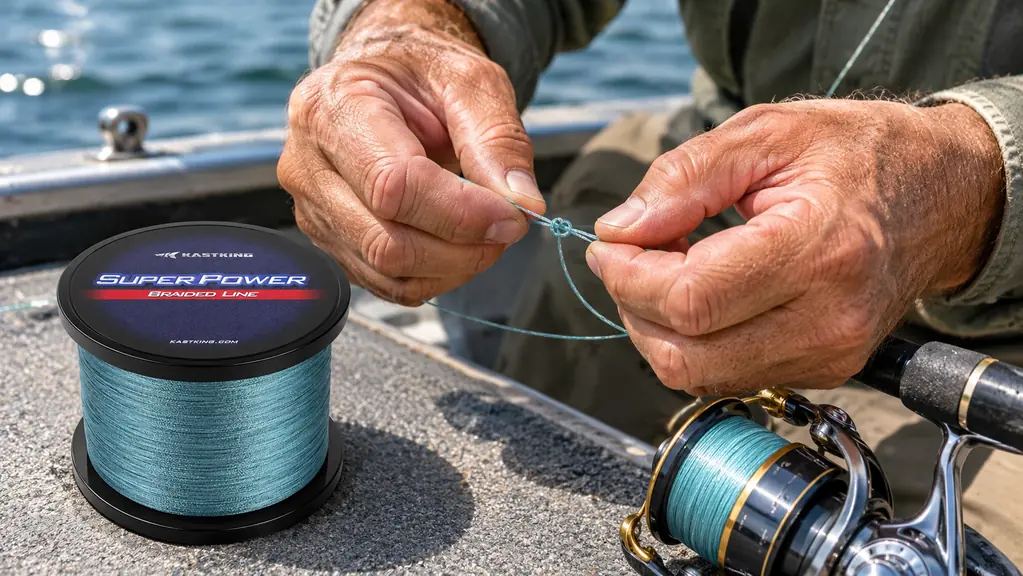
The braid that is on both of my bass rods
Twenty pound test, three hundred yards, and a small diameter for its strength. Spool it once and fish it all season.
Amazon Check Today's Price on Amazon →Zero stretch means your hook set actually reaches the fish
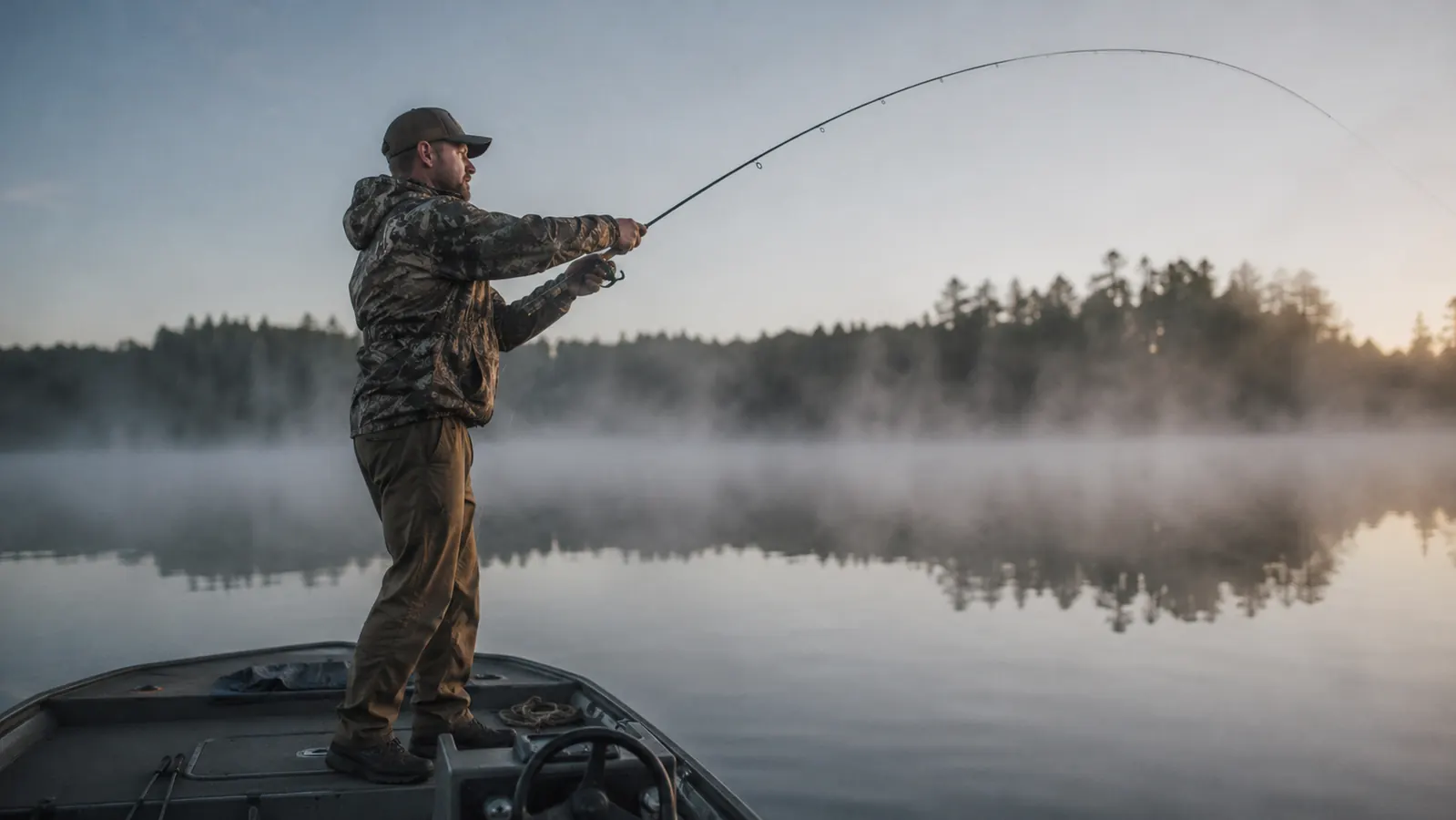
Monofilament stretches. That is the whole ballgame. On a long cast, twenty pound mono can give several feet before the hook moves at all, so a hook set that feels solid at the rod tip arrives at the fish as a soft nudge. Braid has no stretch to give away, so what you do at the handle happens at the hook. My hookup rate on long casts went up the first month and it has stayed up. I also stopped ripping trebles out of fish, because the hook goes where I put it instead of arriving late and hard.
You feel a bass pick up a worm before it moves off
SuperPower braid is built to transmit, and the listing calls out high sensitivity with zero stretch. What that means on the water is you feel a bass mouth a Texas rig on a windy day, when the line is bowed and you would never see the tick. A lot of the bass I catch in summer bite on the drop. With braid I feel the weight change and I set the hook. With mono I was mostly guessing, and guessing is the difference between a reaction bite and a gut feeling.
Twenty pound braid is thinner than twenty pound mono, so it casts farther
The small diameter is the reason. The same strength rating takes less room on the spool and less room in the air, so the lure leaves with less drag and you get more distance out of the same rod. It also means more usable line capacity on a small reel, which matters when a good fish takes a run at the boat and you are watching the spool instead of the fish. Distance is not a bragging number. It is the difference between reaching the weed edge and casting at it.
Knot strength holds when you lean on a fish
The listing calls out strong knot strength, and it holds up. I tie a Palomar with about six turns, wet it, snug it down slow, and trim the tag. A braid that is loosely woven will slip at the knot before it ever breaks in the middle, and that is a bad way to lose a fish you worked for. This one has not done that to me, and I have leaned on some decent bass with it. The multi-strand construction is the reason the knot grabs instead of skating.
It takes abrasion from rock and wood instead of failing at the worst moment
Abrasion resistance is in the product name and it earns it. Dragging a jig over chunk rock or rubbing line across a laydown is where mono gets scuffed and where braid keeps going. I still check the last six feet after every fish and cut back when it feels rough. That habit does not change. But I cut back a lot less than I used to, and I have stopped re-tying in the middle of a drift because a rock took a nick out of the line.
A hook set that feels solid at the rod tip and arrives at the fish as a nudge is the whole problem with mono. Braid gives nothing away.
No memory means no coils on a cold morning
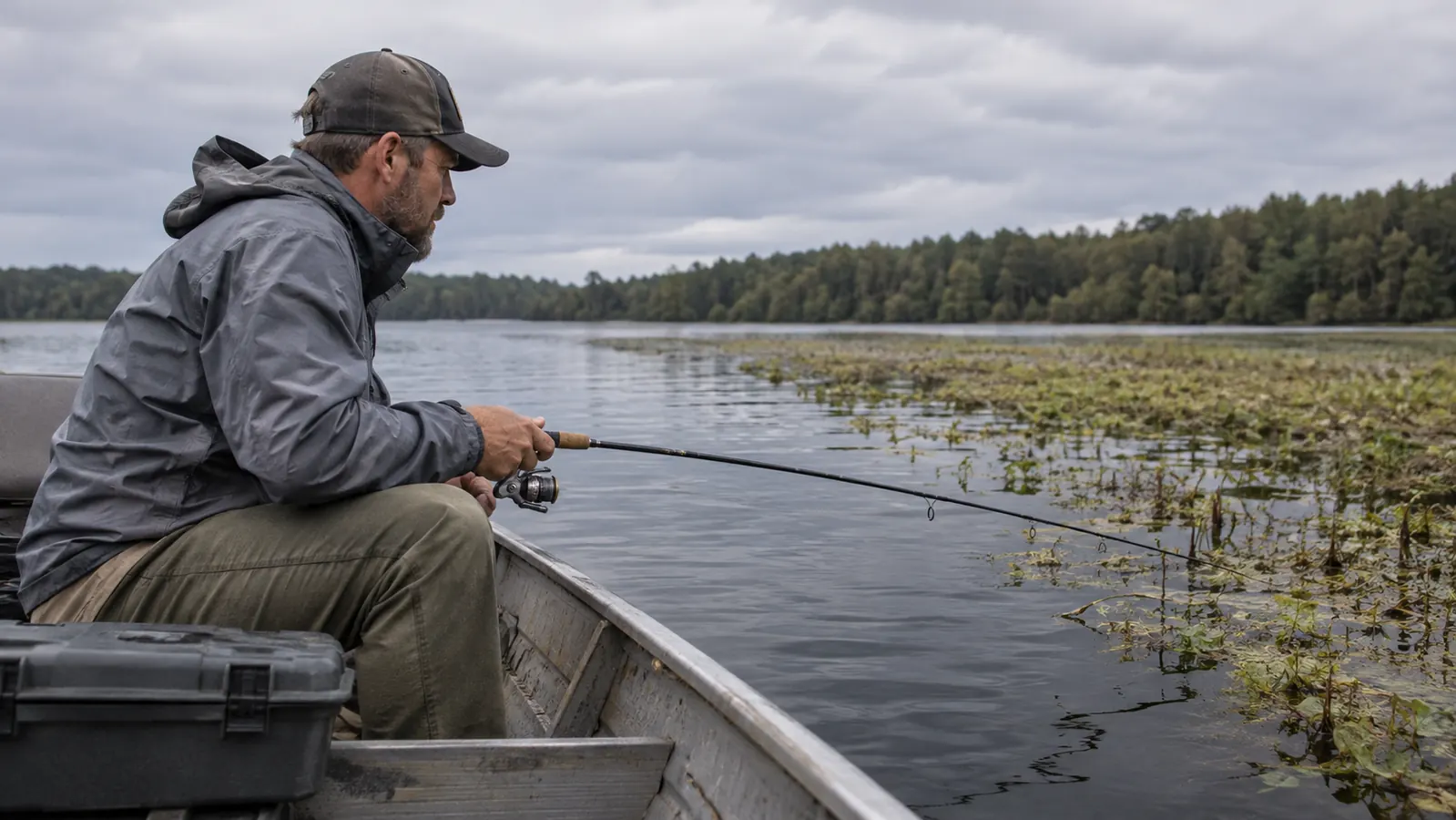
Mono takes a set on the spool. Leave it in the truck overnight in October and it comes off in loops, and those loops turn into a backlash. Braid does not hold a coil. The first cast on a cold morning behaves like the last cast of the day before, which is not a small thing when your hands are stiff and the light is still gray and you have not had your coffee yet.
One spool goes a long way
There are three hundred yards on a spool. I spool on backing first, fill with braid, and only top it off as the season goes, so I am not buying new line every spring for two rods. KastKing backs it with a lifetime warranty. I have never had to use it, and that is the honest report on it. What I can tell you is that a spool that starts in March is still on the reel in September.
The line tells you where your lure is working
You cannot always see a lure, but you can see the line. Braid tracks in a straight plane back to the rod tip, so you can read the speed of a crankbait or see the exact moment a jig stops falling. On a lake with a lot of chop that is information you use on every single cast instead of once in a while. I fish better when I know what the bait is doing down there, and braid is the cheapest way to know.
It simplifies the whole setup
No line conditioner, no stretching it out behind the boat at the start of the day, no swapping spools mid-season because the line took a set. Spool it once, check the last few feet, fish it. The less I fiddle with tackle, the more I fish, and that is the practical case for braid more than anything printed on the label. I would rather spend the hour before daylight tying on baits than messing with line.
It is the one change that actually made a difference
I have bought rods and reels and baits that were supposed to fix something and mostly did not. The line change did. Same rod, same hook, same lake, and I stopped losing fish I should have landed. If a friend at the ramp asked me what to change first, I would say the line, and I would say it before anything else in the boat. Everything you tie on sits at the end of that line, and if the line gives, none of the rest of it matters.
What I'd Skip
Braid is not the right answer for every rod in the garage. On my little trout rod I still run mono, because the guides are small, the fish are small, and a stiff braid is more trouble than it saves. If you fish a finesse drop shot in clear water, plan on a fluorocarbon leader, because braid has no give and clear-water fish get a good look at it. And skip the bargain spools with a loose weave. Cheap braid flattens out, fades, and slips at the knot, and then you blame the line type instead of the spool.
Two more things I would tell a friend at the ramp. Braid cuts fingers, so hold it with a glove or a towel when a good fish surges under the boat. And it does not forgive a drag set too tight, because there is no stretch to soak up a head shake. Set the drag by feel, check it after a few fish, and you will land the ones that used to come unbuttoned. None of that is a reason to stay on mono. It is the honest cost of switching.
Change the line first. Change everything else later.
Same rod, same hook, same lake. Take the stretch out and the fish stop coming off at the boat. KastKing SuperPower braid is the version I keep buying.
Amazon See the KastKing Braid on Amazon →