
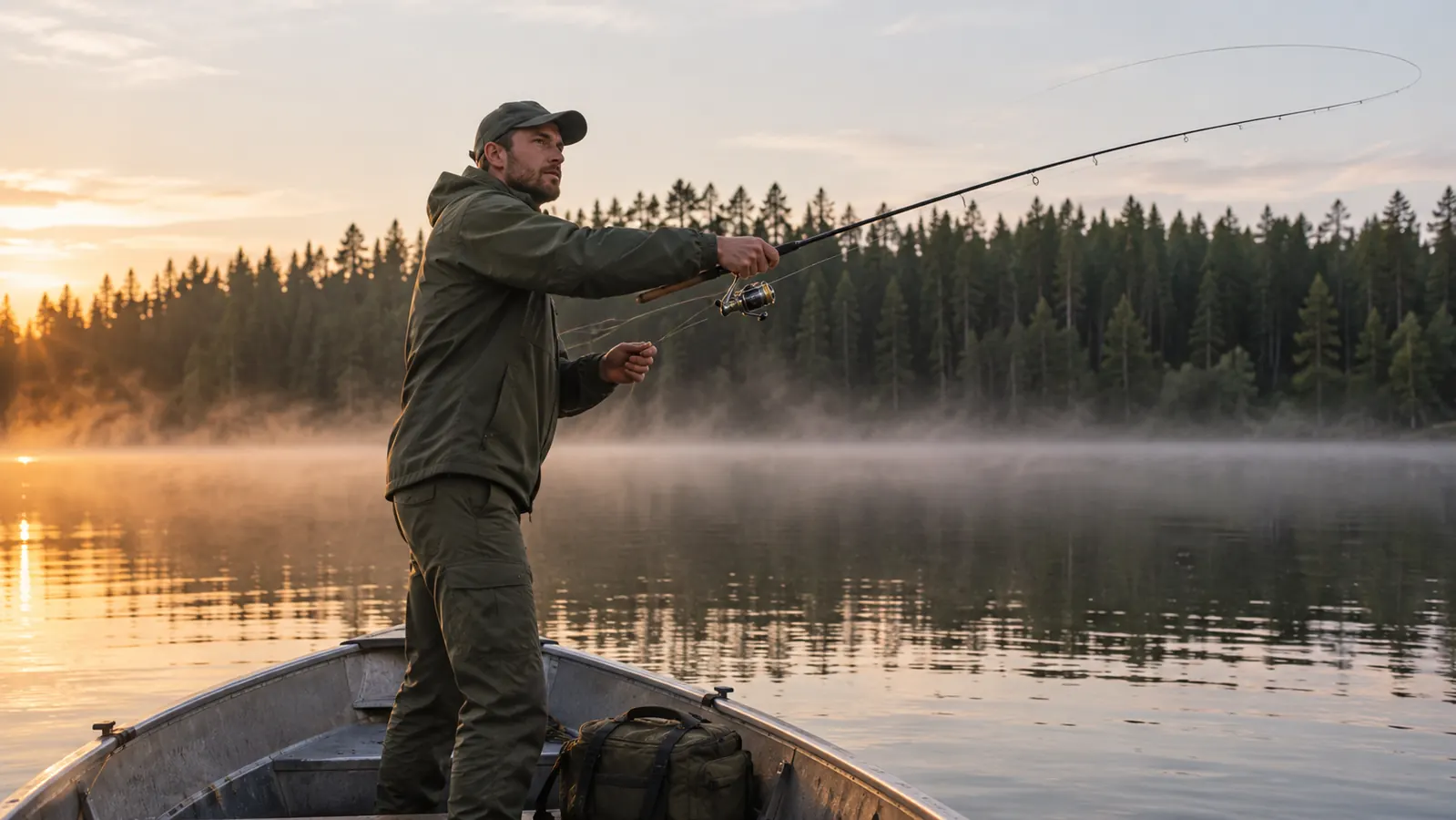
Six spools of fishing line sit on a shelf in my garage, and five of them are up there because I believed a label on the package. The one I keep buying again is KastKing Superpower braid in 20 pound test, and it earned that spot the boring way. It did the same thing on every trip for an entire season and never once gave me a reason to think about it.
I am 58 years old. I work as a maintenance supervisor at a water treatment plant outside Spokane, Washington, and I fish the small rivers and the lakes of the Inland Northwest from the bank and from a 14 foot aluminum boat with a small outboard. Between spring runoff and the first hard frost I get out somewhere around 60 to 80 times, mostly chasing bass and walleye on the lakes. My son Jake comes along when his schedule allows. Carol brings a lawn chair and a book. No guide, no tournament trail, no sponsor patch on my shirt. Just a truck, a boat, and a line that has to work on a Tuesday after work when I have two hours of light left.
The Quick Verdict
Thin, sensitive, and stronger than the price point suggests. It asks you to change your hookset and it is not a rock line, but nothing about it made me want to go back to monofilament.
Amazon Check Today's Price →The 20 pound spool I respool with every spring
300 yards is enough to do two reels with a monofilament backing. If you are respooling before the water warms up, start here and check today's price.
Amazon Check Today's Price on Amazon →How I've Used It
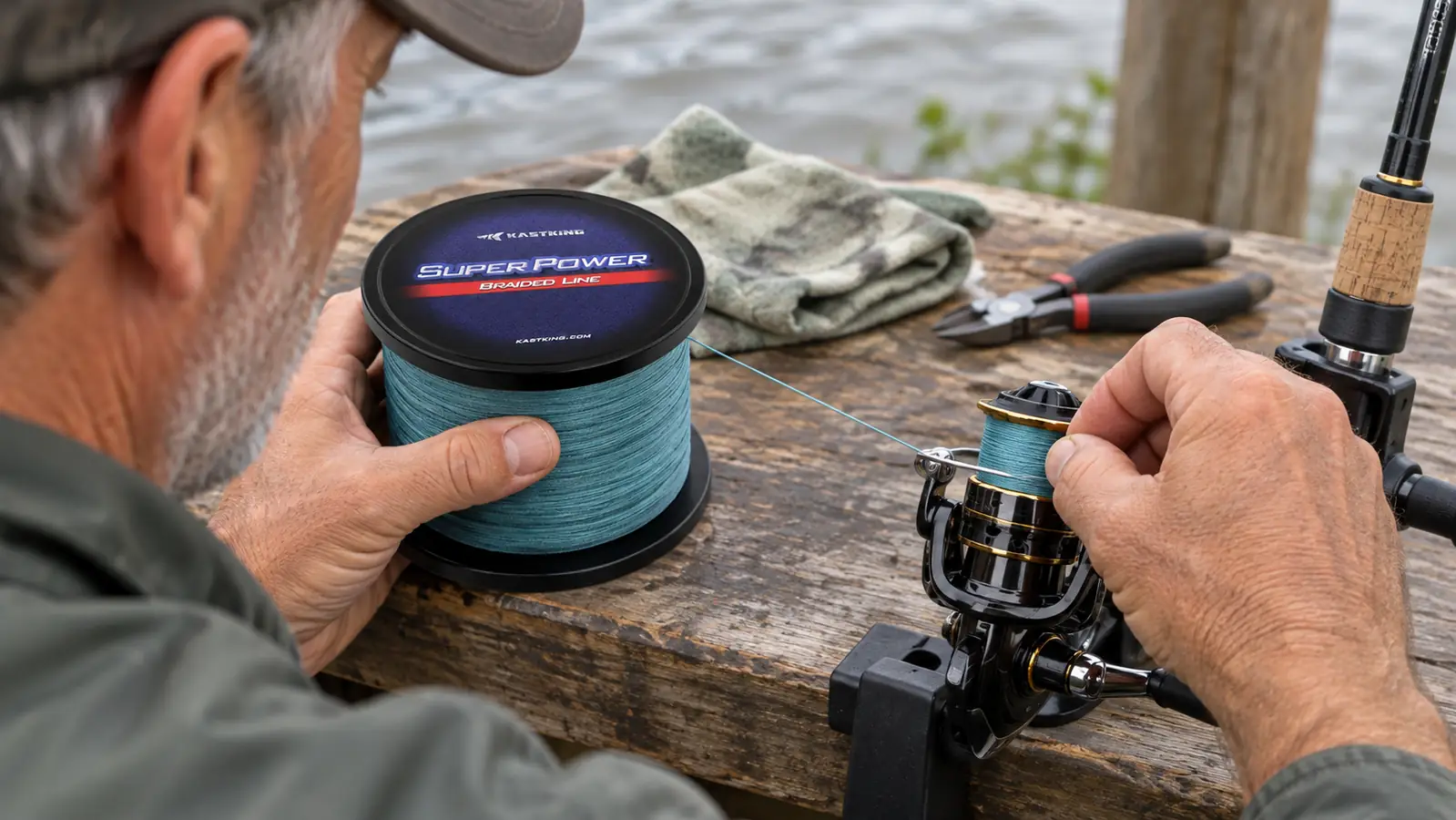
The spool I bought was 20 pound test, 300 yards, and I split it across two reels: a baitcaster that throws jigs and Texas rigs, and a spinning reel I reach for when I want to throw something lighter than the baitcaster handles well. On both reels I laid down a base of cheap monofilament first so the braid had something to bite into on the arbor, then wound it on tight with a glove and steady pressure. Sloppy spooling is the number one reason people blame a braid for problems it did not cause.
From April through the end of October that baitcaster saw a 3/8 ounce football jig dragged over main lake rock, a weightless stickbait skipped around dock pilings, and a bottom bouncer with a spinner rig walking over sand and gravel in 18 to 24 feet of water for walleye. The spinning reel handled lighter jigs and soft plastics in the spring, and a few evenings of dock fishing when the light got long. I also ran it as mainline with a short fluorocarbon leader whenever the water cleared up and the fish started acting educated.
One Saturday in early May sticks with me. The water was 54 degrees, the wind was out of the north at about 15, and I had two hours before Carol expected me home for a family thing. I started with a spinnerbait on the spinning rod and could not buy a bite for the first 40 minutes, so I tied on a 3/8 ounce jig and slow-dragged it down a rocky point instead. That is the kind of afternoon where a line either lets you feel the bottom or hides it from you. This one let me feel it, and I came off that point with three walleyes and one smallmouth and still made it home on time.
The water I fish is not gentle. There are mussel bars, broken rock, drowned timber, and docks that have been sitting in the same spot since the 1970s. I did not baby the line and I did not cut it slack just because I was reviewing it. I also did not treat it like a tow rope, and I think that distinction is where most braid opinions go wrong in one direction or the other.
The Small Diameter Is the Real Story
The number on the package that gets all the attention is the 20 pounds. The number that actually changes your day is how little room that 20 pounds takes up. Braid at this rating is dramatically thinner than monofilament of the same strength, and on a baitcaster that means the line peels off the spool with less drag and less of that fat coil that steals your distance cast after cast.
What that bought me was casting into wind. I could throw a 3/8 ounce jig into a 12 mile per hour crosswind and still reach the outside edge of the weed line, where the fish were holding, instead of landing short and dragging through the middle of nowhere. It also bought me line capacity. Most of a 300 yard spool fits on a reel that would hold far less monofilament at the same test, which matters on the one afternoon a year a walleye decides to leave the county.
Thin line cuts current, too. On the river, a jig on this braid gets down and stays in contact with the bottom with far less bow in the line than I was used to. That is not a marketing point, it is just physics, and it is the reason I stopped running heavy monofilament in moving water.
Zero Stretch, and What It Costs You
Braided line does not stretch. The listing says it, every braid review says it, and it is true. What gets glossed over is that zero stretch is a trade rather than a gift.
Here is the day it proved itself. I was dragging a Texas rig across a flat in about 12 feet of water with a crosswind pushing the boat faster than I wanted. I felt a single tick through the rod, a tap so light I would have called it bottom the year before. I reeled down and lifted. Fish. On monofilament that tick would have been swallowed up by stretch and by the bow in the line long before it reached my hand.
Now the cost. For the first month I lost fish, and it took me longer than it should have to figure out why. With no stretch in the line, you do not need to swing like you are closing a tailgate. I was setting the hook with a full overhead sweep and either pulling the bait out of the fish's mouth or bending out a light wire hook on the rock behind it. Once I cut my hookset down to a firm lift and a reel, the landed ratio went right back to normal. If you have fished monofilament your whole life, budget a few trips to relearn that.
Here is how I fixed it, and it cost me one evening. I clamped a spare rod in the garage, tied a hook to a bucket handle, and practiced a shorter sweep: reel down until the rod loads a little, then a firm lift that stops around eye level. Twenty reps and it started to feel normal instead of strange. The next trip out I landed seven of the eight fish that bit. In April I was landing maybe half. If your hooksets have always been a full overhead swing, spend that evening with a bucket. It is a lot cheaper than losing fish for a month and blaming the line.
The same lesson applies to treble hooked baits. Braid plus a hard hookset plus a crankbait is a bad combination, and no line on the shelf fixes it. I fish crankbaits on this braid only with a leader and a softer rod, and even then I ease way off on the hookset and let the rod load do the work.
I felt a single tick through the rod on a windy flat. On monofilament, that tick would have been swallowed by stretch before it ever reached my hand.
Knots, Rocks, and Honest Wear
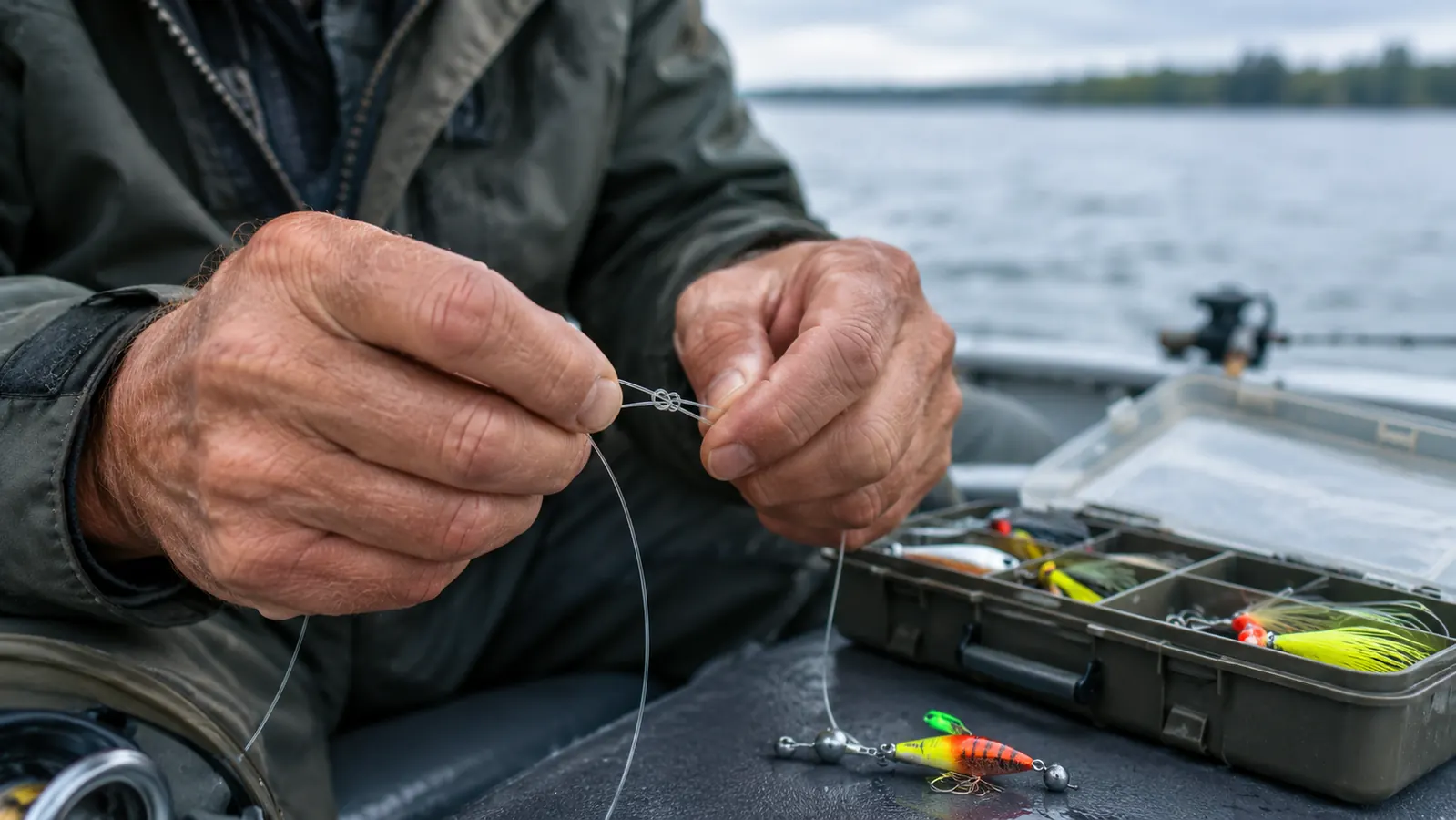
The listing talks about knot strength coming from the way the strands are put together. I cannot verify strand construction on my kitchen table and I am not going to pretend I can. What I can tell you is what held. A Palomar tied to a swivel or to a leader held all season. I cinched every one down hard and snug before I trimmed the tag, and I never had one slip.
I did try the knot I had used for 30 years on monofilament, and it let go on the first decent fish of the year. It was a wet improved clinch, tied the same way I had tied it since I was a kid, and it had never failed me on mono. That is the part about braid that surprised me even though I had read about it: slick line and certain knots simply do not get along. I tied the Palomar on everything after that, checked it twice, and stopped thinking about knots.
I had exactly one break off that mattered, on a snag in drowned timber, and the line parted at the knot rather than in the middle. That is a knot problem, not a line problem, and I had tied it in a hurry with cold hands in a gust of wind. I retied and kept fishing the same stretch.
The package says abrasion resistant and I would call that fair rather than heroic. Braid is not a rock line, whatever you read. Around broken rock and mussel bars I checked the last 18 inches of line every 20 casts by running it through my fingers and feeling for the fuzzy patch. When I found one, I cut back above it and retied. Over five months I cut back maybe four times, which is about what I expect from any braid that is genuinely touching structure all day.
What surprised me was how the line aged. A cheaper braid I fished a few years ago started to feel like wet string by August, and the outer wrap went fuzzy along the whole spool instead of just the last few feet. This KastKing line held its body. In November it still felt like the line I spooled in April, with a slight softening that I would call normal and not a problem.
A Season on One Spool
I respooled once, in the middle of July, and it was more about wanting a fresh top shot before a week at the lake than about the line failing. The braid I took off was still usable and went onto a spare reel. That works out to a season and a half of fishing from one 300 yard spool spread across two reels, and when you divide it by trips it becomes one of the cheapest things on the boat.
For anybody deciding between one spool and two, here is what my notebook says. I keep a log of every trip in a spiral notebook, mostly because I forget what worked by the next weekend. From the third week of April to the last week of October I logged 62 trips. Fourteen of those were bank trips where the line barely got wet. The rest were four hours on the water or longer, and a handful were full days. One spool covered all of it with line left over for the July top shot.
The listing carries a lifetime warranty. I have not had to test it, and for a fishing line that is the best thing I can say about a warranty. I have no idea how a claim would go because I never filed one, and I would rather a line just not break than have a generous policy behind it.
One thing I would tell anybody buying braid for the first time: put a wrap of tape or a monofilament backing on the arbor. Braid is slick, and a slick line on a slick spool will spin. That is not a knock on KastKing, it is true of every braid I have ever spooled, and it takes two minutes to prevent an afternoon of cursing on the water.
What I Liked
- Thin for its strength, so you get more line on the reel and longer casts with light jigs
- Zero stretch makes a light tick readable even in wind and current
- Palomar knots held all season, on fish and on snags alike
- Held its body for five months of hard use without going soft or fuzzy across the spool
- 300 yards is enough to spool two reels with a monofilament backing
Where It Falls Short
- No stretch punishes a heavy hookset, and I lost fish until I changed how I set
- Not a rock line, so you still have to check and cut back abraded line
- Needs a backing or a wrap of tape on a slick arbor, which is extra work at the bench
Who This Is For
This line is for the angler who fishes lakes and reservoirs for bass and walleye, from the bank or from a small boat, and who wants to feel what is happening at the end of the line. If you are tired of missing soft bites in wind, or tired of watching casts land short of the weed edge, the thin diameter and the zero stretch are the two things that will actually change your fishing.
It also suits the person who respools a couple of reels a year and does not want to think about it again until next spring. 300 yards covers two reels with backing, the line holds up through a full season, and it does not ask you to learn a new casting stroke to get along with it.
Who Should Skip It
Skip it if you fish small clear rivers for trout and you need a line that sinks and stays subtle. This is not that line and it was never meant to be. Skip it if your whole game is cranking treble hooked baits on a fast rod, because zero stretch will cost you more fish than it gains unless you slow your hookset way down. And skip it if you fish shell bars and broken rock all day and you are not willing to run the last foot of line through your fingers and cut back when it gets rough. No braid survives that treatment and this one is no exception.
If you are brand new to braid and you want something forgiving that hides your mistakes, fish monofilament one more season and then come back. Braid rewards attention and punishes habit, and that is true of every brand on the shelf, not just this one.
One spool, two reels, a full season of fishing
If you are respooling the baitcaster before the water warms up, this is the one I keep buying. Check today's price and get it wound on before the first warm weekend.
Amazon Check Today's Price on Amazon →