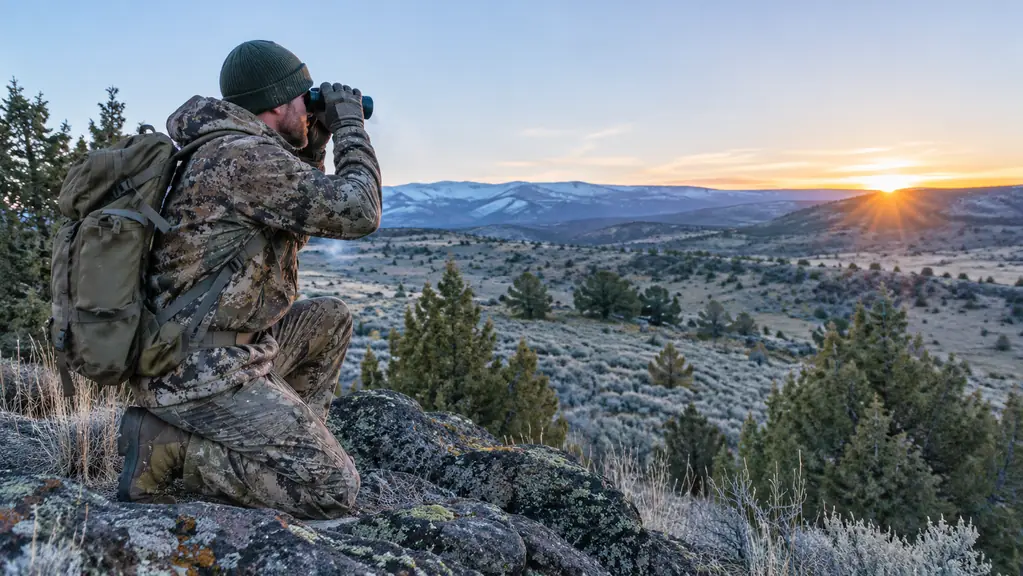
I glass a lot of ground every fall, mostly public-land whitetail and mule deer in eastern Washington, and for years I did it behind a pair of binoculars that cost less than a tank of gas. They worked fine right up until the morning I spent forty minutes studying a patch of sagebrush that turned out to be a rock, then walked past three does bedded sixty yards off the ridge because I never picked them apart. That was the fall I bought the Vortex Crossfire HD 10x42, and the difference was not subtle.
Good glass does not make you a better hunter overnight. What it does is give you back the thing you are actually short on, which is daylight and patience. Here are ten reasons it matters, in the order I noticed them.
The pair that rides on my chest from September through the late season
Vortex Crossfire HD 10x42. Roof prism, fog proof, waterproof, 1.4 pounds, backed by the unlimited, unconditional, lifetime VIP warranty.
Amazon Check today's price on Amazon →You can pick a bedded buck out of sagebrush at 400 yards
Eastern Washington is not timber hunting. It is big country with low cover, and a bedded mule deer at four hundred yards is a patch of shade the size of a dog. Through mediocre glass you see sagebrush. Through good glass you see an ear flick, then a jaw working, then the whole animal. Two seasons back I set up on a rim above a dry creek and picked up what I took for a stump at the edge of a juniper. Ten minutes later the stump moved its head. He was a three point, bedded in the open, and I had walked past that exact patch of ground twice in earlier years with a cheaper pair. Once you have watched that happen on a real hillside, you will not want to go back to guessing.
You stop walking ground that has nothing on it
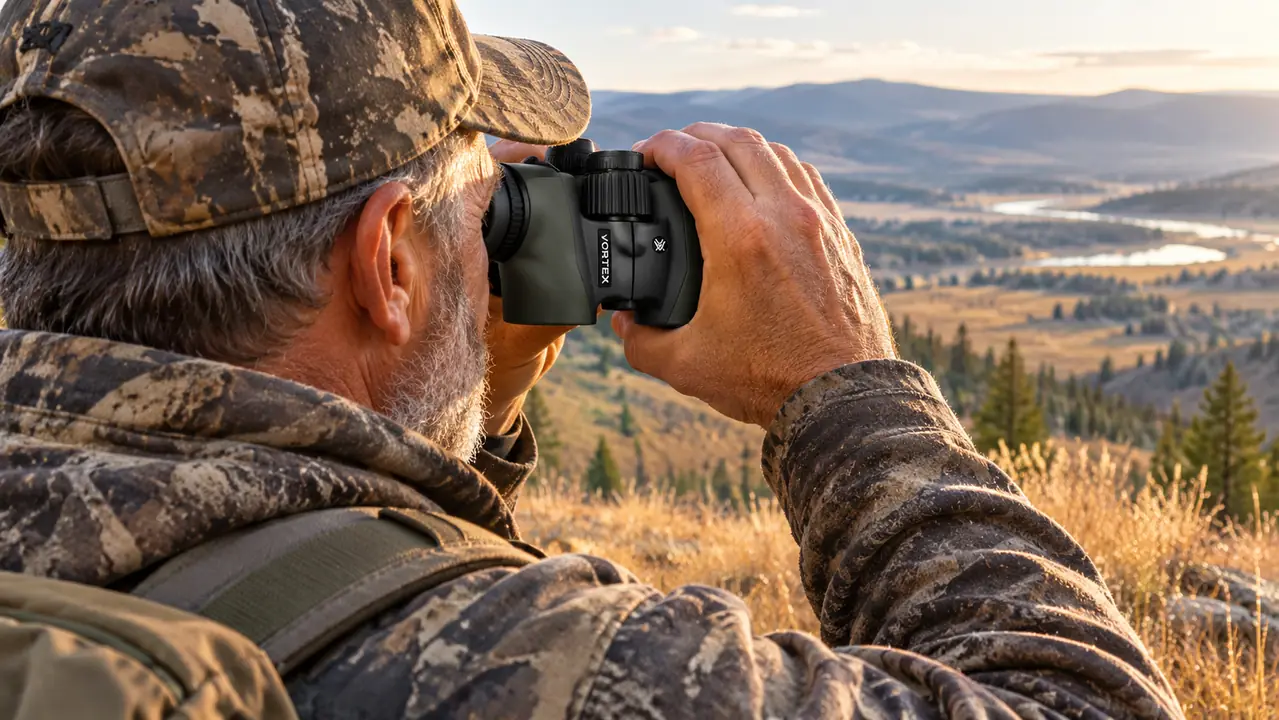
Most of what I hunt is public and most of it is empty on any given morning. Cheap glass makes you walk it anyway, because you cannot see far enough to know better. Ten minutes on a ridge with something that resolves detail tells you whether a basin is worth a two mile loop. I have saved more miles with binoculars than with boots, and it is not close.
You can judge a buck without pushing him out of the country
Getting closer to check a set of antlers is how you blow a spot. There is a drainage I hunt where the thermals switch at first light and a bumped buck is gone for the season. Ten power behind a 42 millimeter objective lets me sit still and count points from a distance where the animal never knows I am in the county. That is the whole game on pressured public land.
The last twenty minutes of legal light stop being wasted
The biggest deer I have seen on public ground showed up with about twelve minutes of legal light left. A 42 millimeter objective with a 4.2 millimeter exit pupil and a relative brightness of 17.64 does not turn night into day, but it holds a usable image while the hillside goes blue. Cheap glass quits on you twenty minutes before the law does.
Fog and rain quit ending your morning early
October here is fog in the bottoms and drizzle on the ridges. A binocular that fogs up inside is a paperweight until it clears, and one that takes on water is done for good. The Vortex Crossfire HD is fog proof and waterproof, and I have set mine down in wet sage more times than I want to admit while messing with a rangefinder. It still comes up clean. One morning it went from clear to pea soup in about twenty minutes. I wiped the outside of the lenses and kept working the edge where the fog was thinning, and that is where I found a doe at eighty yards that I would have walked past blind. Nothing fogged on the inside. That is the whole test.
You can glass for two hours without your eyes quitting
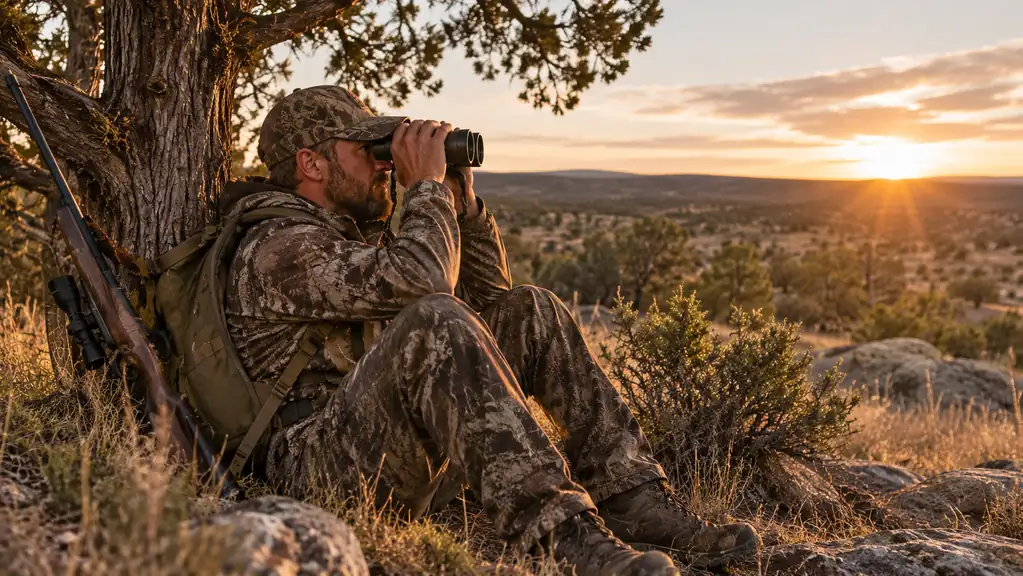
Eye fatigue ends most glassing sessions, not a lack of deer. Fifteen millimeters of eye relief and eyecups that twist up and down let me set the binoculars against my brow instead of jamming them into my face, and I wear glasses, so that matters. The eyecups stay where I put them. Small thing. It is the difference between a long sit and a short one.
One pair stays on your chest all season and takes a beating
Mine live on a harness strap from September into the late season. They get rained on, dropped on rock, and shoved in a pack next to a folding saw. The rubber armor gives a non slip grip when my hands are wet and soaks up the knocks. At 1.4 pounds they are light enough that I forget they are there until I need them, which is the only test that counts.
10x42 is the size that does almost everything
Ten power is hand holdable. Twelve and fifteen are not, not for long sits, and a rock steady rest is not always lying around on a sagebrush flat. A 42 millimeter objective keeps the whole package small enough to carry all day while still gathering light at the edges of it. Roof prism keeps them straight and slim in the hand. If you own one pair for western hunting, this is the size.
Coated lenses show you detail in shadow
Fully multi coated lenses with anti reflective coatings on every air to glass surface is the line most people skip past in the specs, and it is the one that decides whether you see a deer's ear on the shaded side of a coulee at noon. Less light bounces off the glass and more of it gets to your eye. I noticed it first on a north facing slope that does not see sun until nearly noon. What looked like one solid black shadow through my old glass turned into a deer feeding with its head down once the Crossfire HD was on it. The difference shows up in shadow and at distance, which is where the deer usually are.
The warranty means you use them instead of babying them
Vortex backs these with an unlimited, unconditional, lifetime VIP warranty. What that actually changes is behavior. I do not leave them in the truck because I am worried about ruining them, and I do not treat a scratch on the objective as a crisis. Glass you are afraid to use is glass you leave home, and binoculars sitting on a shelf have never helped anybody fill a tag.
What I'd Skip
I would skip anything above ten power unless you plan to hunt from a vehicle or sit in a blind with a rest. Twelve power sounds better on paper and is worse in your hands after an hour. I would also skip the giant objective sizes for walk-in country. You gain a little at last light and you pay for it in weight on every step you take from the truck.
And I would skip buying two pairs of mediocre binoculars to cover different situations. Put the money into one set you trust and learn how to use it. If you are weighing the Crossfire HD against the cheaper 10x42s in the same size class, the side by side comparison is worth ten minutes of your time before you order.
Forty minutes on a rock that looked like a deer was the last morning I trusted cheap glass on a ridgetop.
Ten reasons, one pair of binoculars, and about six weeks until the season opens
10x magnification, 42 millimeter objective, fog proof, waterproof, and backed by the VIP lifetime warranty. This is the set I carry.
Amazon Check today's price on Amazon →