
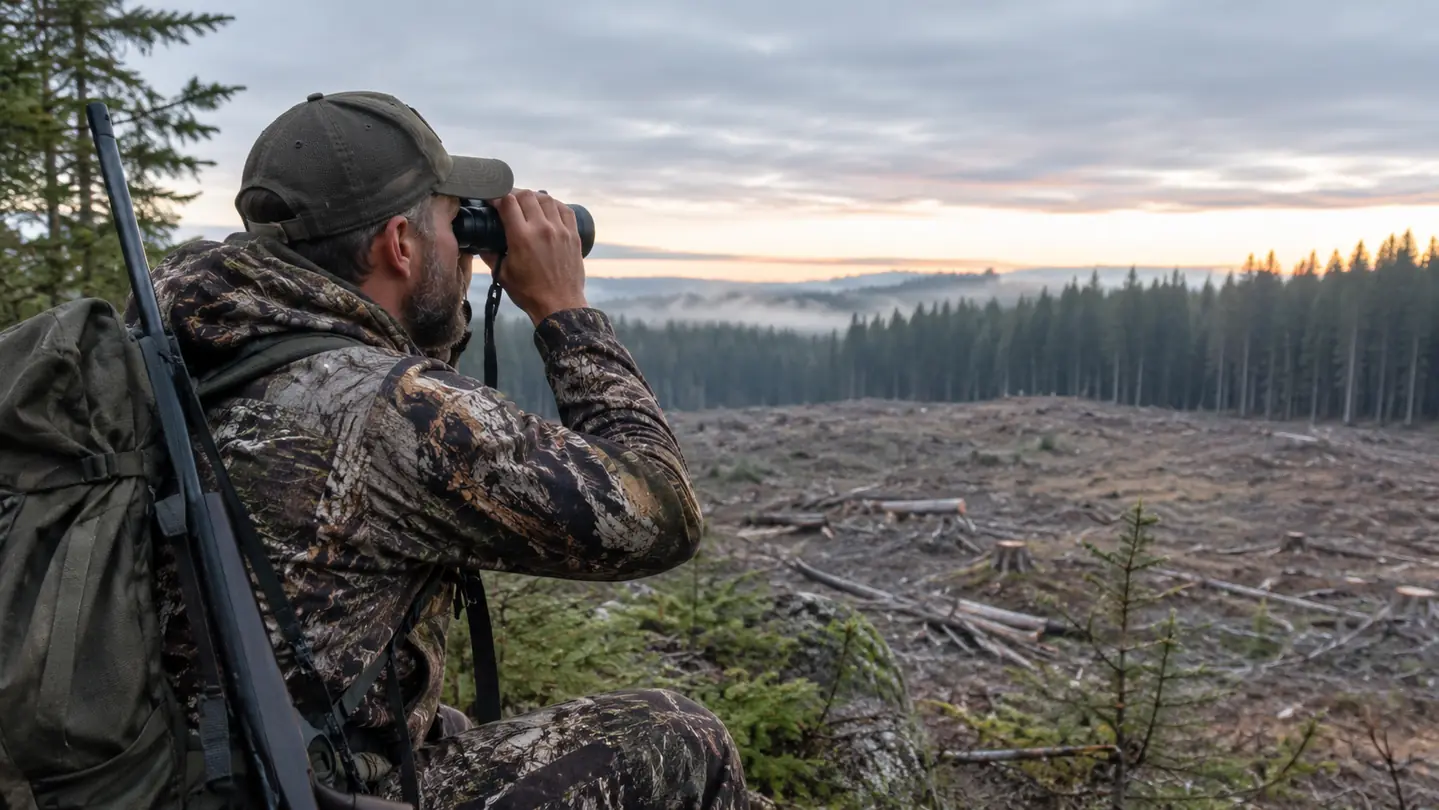
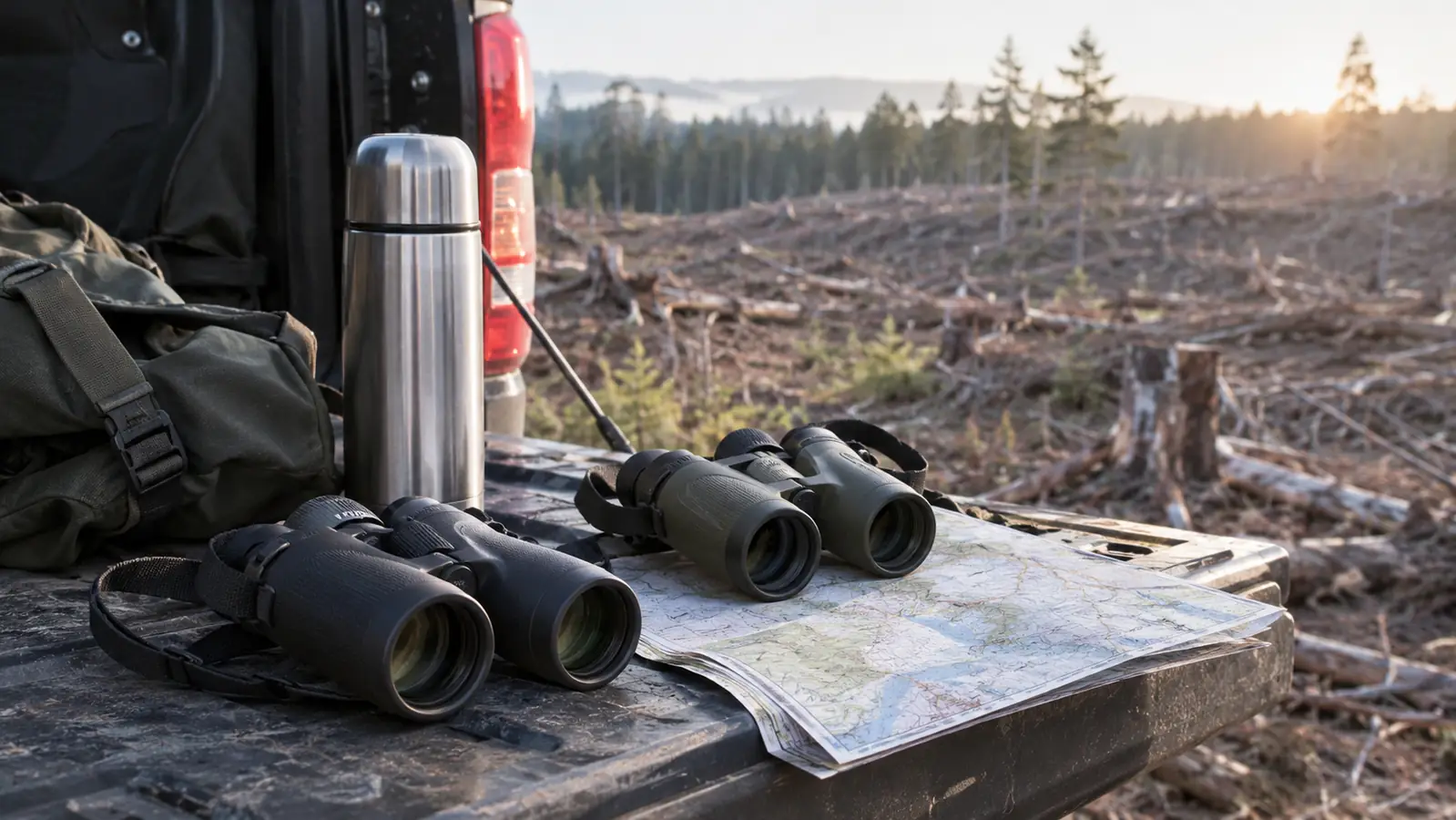
I have been glassing deer and turkey in eastern Washington since I was a boy, and for the last four seasons the binoculars I reach for have been the Vortex Crossfire HD 10x42. Before that I carried a budget 10x42 I picked up off a sporting goods shelf, and I still keep a set in the truck for whoever forgot theirs. So when a buddy asked me at the tailgate whether the Crossfire HD is worth it over a budget pair, I did not have to guess. I had both sitting on the tailgate next to a cold cup of coffee, and I had a clearcut to look at.
Short answer: for the way most of us hunt and fish, the Vortex Crossfire HD is the better pair to own. Not because a budget 10x42 cannot show you a deer. It can. The difference shows up in the tenth minute of glassing, in cold fog, in rain, and in the second season when the eyecups still hold where you set them. A budget pair is a spare, a truck pair, a pair for a kid or a guest. The Crossfire HD is the pair you plan your morning around.
| Vortex Crossfire HD 10x42 | Budget 10x42 | |
|---|---|---|
| Up-front cost | Costs more than a budget 10x42, and that gap is the whole reason this comparison exists | The lower entry cost is the point of a budget pair |
| Glass and coatings | Fully multi-coated lenses with multiple anti-reflective coatings on all air-to-glass surfaces | Often fewer coating layers, which shows up as flare and haze in low light |
| Fog and weather | Fog proof and waterproof | Often water resistant only, and fogging is a common complaint in cold swings |
| Eye relief | 15mm eye relief with twist-up eyecups that work with or without glasses | Varies widely by model, and budget eyecups can slip or fail to hold |
| Weight | 1.4 pounds | Depends on the model, some are lighter and some are heavier |
| Low light | 42mm objective, 4.2mm exit pupil, relative brightness of 17.64, plus the coatings and roof prism | Same numbers can appear on paper, but the view is decided by the glass and coatings |
| Warranty | Vortex VIP warranty is unlimited, unconditional, and lifetime | Usually a limited term, often a year or less |
| Durability | Rubber armor provides a secure, non-slip grip and external protection | Depends on the model, some hold up and some do not |
| Best for | All-day glassing, wet weather, and one pair to keep for years | Truck, boat, spare, guest, and occasional use |
How I Compared Them
I did not set up a lab or shoot a resolution chart. I took both pairs on the same walks, in the same weather, and looked at the same deer, stumps, and treelines. I used them from the truck window, from a ridge above a clearcut, and from the bank of a river while waiting for trout to rise. I wore glasses on some days and not on others. I cleaned them the same way, carried them the same way, and did not baby either pair. The budget pair was not a junk-store special. It was a normal budget 10x42, the kind you find in a sporting goods aisle or on a big online listing.
The test that told me the most was not a resolution chart. It was a cold morning on a clearcut, with the sun not yet over the ridge and a line of dark timber on the far side. I looked through one pair, then the other, then back. The budget pair showed me shapes. The Crossfire HD showed me a deer's rear end and the white patch under its tail. That is not a spec on a box. That is the reason I care.
I kept a small notebook in the truck and wrote down the date, the time, the temperature, and what I could and could not see with each pair. That sounds fussy for a guy who spends his week keeping pumps running, but it kept me honest. On the morning of October 12 I had 19 degrees on the thermometer and a skim of ice in the water bottle. On November 3 I had rain coming sideways and the heater going in the cab. Those notes are why I can tell you what changed instead of what I think changed.
What the Numbers Mean in the Field
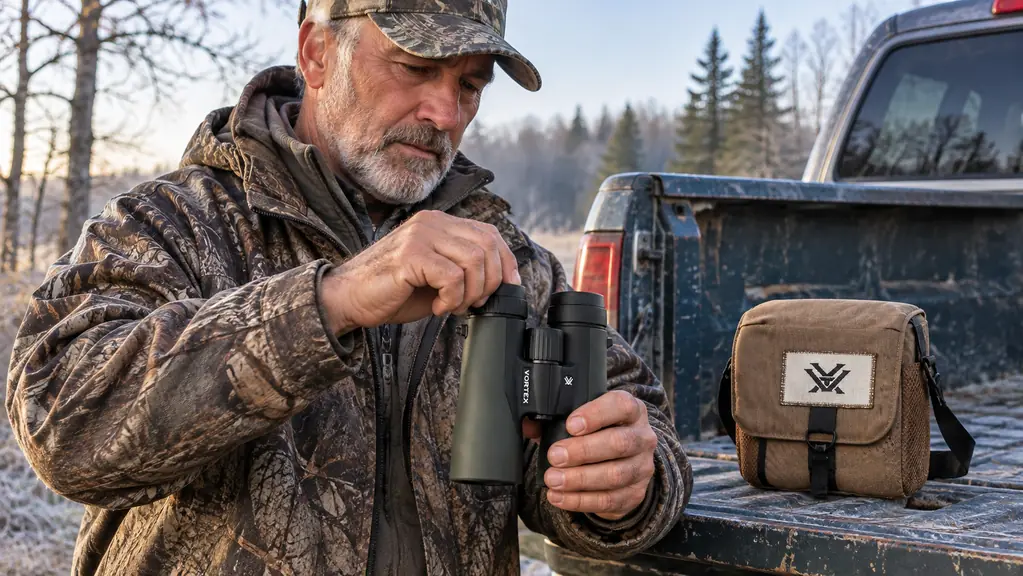
The numbers on the box are easy to read and easy to misread. Both binoculars are 10x42, so both magnify ten times and both gather light through a 42mm objective lens. Both have a 4.2mm exit pupil and a relative brightness of 17.64. On paper that looks like a tie. In the field it is not a tie, because the view you actually see is the product of the glass, the coatings, and the prisms, not just the size of the holes at the ends.
Fully multi-coated lenses are the part I care about most. Vortex puts multiple anti-reflective coatings on all air-to-glass surfaces, and that is what keeps the image from washing out when the sun drops behind the ridge. A budget pair often has fewer coatings or coatings on fewer surfaces, and you see it as flare, haze, and a gray film over the shadows. You do not need a lab to notice. You need one late afternoon against a dark treeline.
Here is a plain test you can run yourself. Find a dark treeline about 200 yards off and look at it through both pairs in the last twenty minutes of light. With the budget pair I could see the outline of the trees and the sky behind them, and not much in between. With the Crossfire HD I could see individual trunks and the gaps between them, and I could pick out a horizontal shape that turned out to be a downed log. Same distance, same light, same eyes. The difference was the glass.
The Crossfire HD uses a roof prism and weighs 1.4 pounds. That is light enough to hang around my neck on a long walk in and heavy enough that it does not bounce like a toy. Eye relief is 15mm, and the eyecups twist up and down. I wear glasses sometimes and not other times, and I can set the eyecups for either without taking the binoculars off my face. Small thing. It stops being small when you are trying to look at a deer before it steps into the timber.
Where the Vortex Crossfire HD Wins
The first place it wins is the cold morning. Eastern Washington deer season can start in the twenties and end in the forties before lunch. A fog proof binocular is not a luxury there. The Crossfire HD is fog proof and waterproof, and I have had it out in snow, rain, and the kind of drizzle that soaks everything on the walk in. I have had it out at 19 degrees and in a wet snow that stuck to everything. I have carried it from a cold truck into a warm cab and watched the outside fog for a few seconds and then clear. The budget pair I owned before would fog on the inside on a day like that, and once it fogs on the inside you are done for the morning. You cannot wipe your way out of it.
The second place is the image at the edges of the day. The fully multi-coated lenses and the roof prism give me a view I can trust when a deer is standing in the shadow of a pine at last light. I am not going to tell you it turns midnight into noon. It does not. What it does is let me tell a stump from a bedded buck a few minutes longer, and that is the whole game. The Vortex also stays sharp enough that I can count points without second-guessing myself.
The third place is the small stuff that adds up. The rubber armor gives me a non-slip grip when my hands are wet, and the twist-up eyecups hold their position. The 15mm eye relief works with my glasses. The 1.4 pound weight is easy on my neck on a three-mile walk in. And the VIP warranty is unlimited, unconditional, and lifetime. I have not had to use it, but I know people who have, and that matters when you are buying one pair to last.
I also like that the Crossfire HD is simple. There is no app to pair, no battery to charge, no mode to scroll through. You put it to your eyes and look. For a guy who spends his workweek keeping pumps and valves running, that is a feature. The last thing I want on a Saturday morning is a piece of glass that needs a software update before I can glass a ridge.
The Crossfire HD is fog proof and waterproof, and it has stayed clear through snow, rain, and the walk back to a warm truck.
Where Budget 10x42 Binoculars Win
The budget pair wins on the thing that gets people into the store: up-front cost. It is the reason a budget 10x42 exists. If you are buying a pair for the glovebox, the boat, or a guest who forgot theirs, you do not need to spend on glass you are not going to baby. A budget pair that gets scratched in the truck bed is not a tragedy. A pair of Crossfire HDs that gets left on the tailgate is.
The budget pair also wins on the permission to not care. I have handed a budget pair to a buddy who wanted to look at a ridge while eating a sandwich, and neither of us worried about it. Some budget 10x42s are lighter than the Crossfire HD, some are heavier, and the truth is it depends on the model. But the category as a whole is built for occasional use. If you glass for two minutes a day and leave the binoculars on the shelf the rest of the year, that is a real advantage. You are not paying for fog proofing and lifetime service you will never test.
There is one more place a budget pair wins, and it is not about the glass. It is about the kids and the guests. I have taken Jake and a few of his friends out, and I have handed a budget pair to a twelve-year-old without a speech about keeping it clean. If it gets dropped in the dirt, we wipe it off. If it gets left in the truck, it is still there next time. The Crossfire HD is the pair I keep track of. The budget pair is the pair I lend.
If you want one pair that handles cold, rain, and all-day glassing, this is the one I would buy
The Vortex Crossfire HD 10x42 is fog proof, waterproof, and backed by the VIP lifetime warranty. It weighs 1.4 pounds, has 15mm eye relief, and uses fully multi-coated lenses. It is the pair I keep around my neck, not in the truck.
Amazon Check Today's Price on Amazon →Who Should Buy Which
Buy the Vortex Crossfire HD if you hunt or fish more than a handful of days a year, if you glass for more than a few minutes at a time, if you wear glasses, or if you have ever had a pair fog up on a cold morning. It is also the pair I would buy for a son or daughter who is going to hunt with you for years. One good pair that stays clear and keeps its eyecups where you set them is worth more than three budget pairs you replace.
Buy a budget 10x42 if you need a spare, a truck pair, a boat pair, or a pair for a guest. Buy it if you are not sure yet whether you will use binoculars enough to care about coatings and warranty. Buy it if losing it would ruin your week. I lent one to a friend of Jake's last fall and got it back with a scratch across the barrel and a smear of something I did not want to identify. I wiped it off and handed it back to him the next weekend. That is what a budget pair is for. Try that math with glass you paid real money for and you will find yourself giving a lecture instead of handing over binoculars.
If you are in between, here is the way I would decide. Count the days you plan to be out this fall and winter. If it is more than ten, and you plan to be out before first light or after last light, the Crossfire HD is the safer buy. If it is two or three days and most of your looking happens in the middle of the day, a budget pair will do the job. The worst buy is the middle one that costs enough to hurt and still fogs. I have been there, and I did not stay there.
One pair, kept clean and ready, beats a rotation of borrowed and fogged glass
If you are ready to stop swapping budget pairs every couple of seasons, the Vortex Crossfire HD 10x42 is the pair I would put on my own neck. Check the current price and the reviews, then get it out on a ridge before the season gets away from you.
Amazon Check Today's Price on Amazon →