
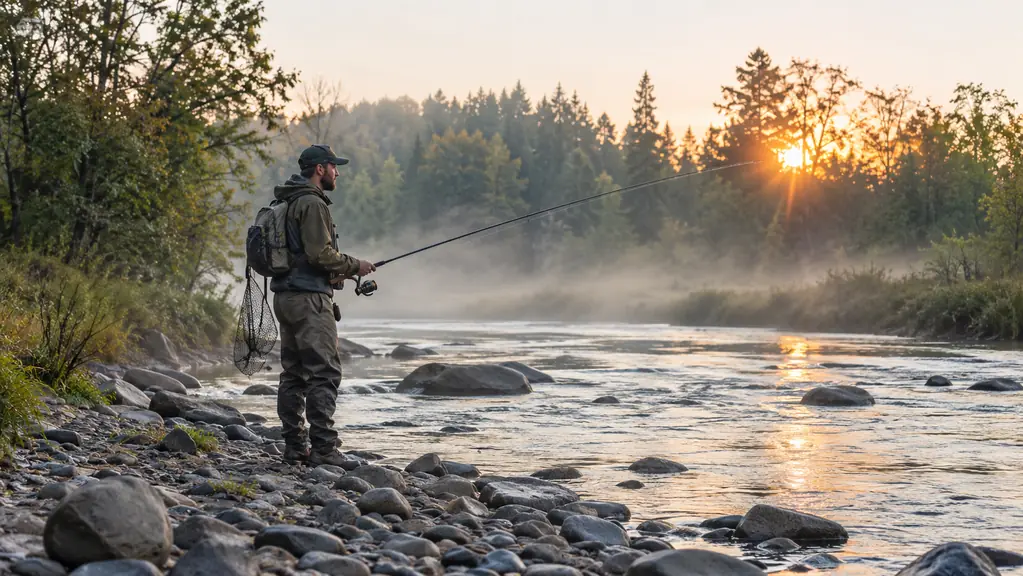
Trout from the bank is not a gear problem most days. It is a position problem. I have watched a dozen anglers line up shoulder to shoulder on the same hole outside Spokane, same bait, same cold morning, and the only one catching fish is the one who read the seam before he tied on. The rest of us were casting where the water looked good to a human, not where it looked good to a trout.
I am 58, I work maintenance at a water treatment plant, and I fish the small rivers and lakes of the Inland Northwest from spring through summer. My bank outfit is a 5 foot Ugly Stik spinning kit, a two-piece light-power rod with a reel that holds 240 yards of 6-pound mono. The whole thing weighs 16 ounces. It is not fancy. It is short enough to cast under alders and strong enough to turn a fish in current, and that is most of what bank trout ask for.
The short outfit that keeps you out of the brush
A 5 foot two-piece spinning rod and reel, ready to fish. It fits behind the truck seat and puts a small lure where a long rod cannot.
Amazon Check Today's Price on Amazon →Step 1: Read the water before you rig up
Step one is not tying a lure. Step one is standing still for two minutes and reading the water. Trout in a small river do not spread out evenly. They hold in a narrow band where the current slows just enough to save energy and still brings food. That band is usually a seam, a line of foam, the edge of a rock, or the dark water under an undercut bank. If you cast into the middle of fast water because it looks fishy, you are fishing where no trout wants to sit.
Look for three things: a current seam, cover, and an escape route. The seam is the grocery line. The cover is the shade or structure that makes the fish feel safe. The escape route is deeper water within a foot or two, because a trout will not hold in a spot where it has nowhere to go when a shadow crosses the bank. On the rivers I fish, the best bank spots are often no more than ten feet from shore. You do not need to cast across the river. You need to cast to the seam.
Step 2: Spool it right and set up the rod
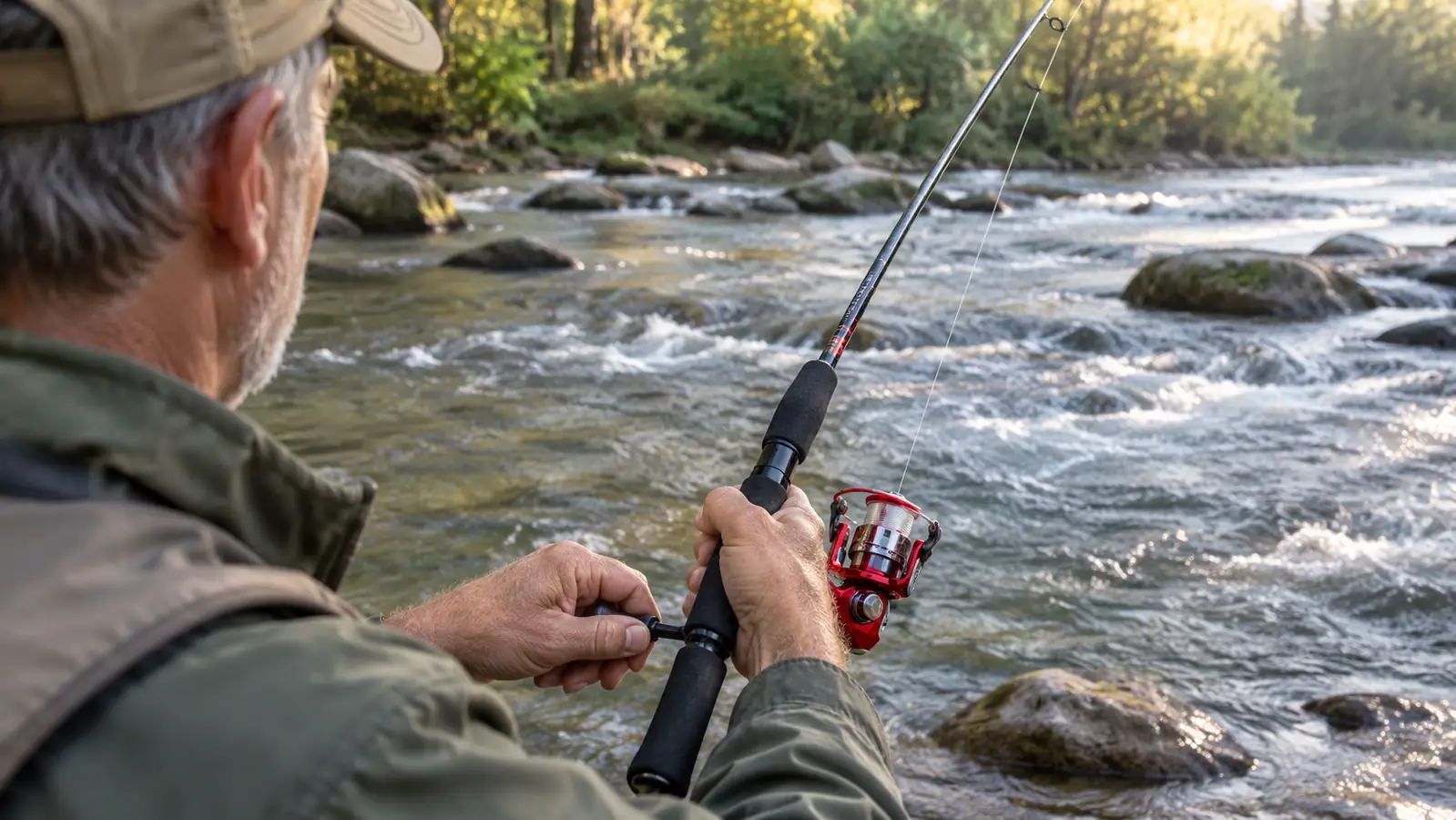
Spool the reel on the Ugly Stik with 6-pound monofilament and fill it close to the lip, but not past it. The reel is rated for 240 yards of 6-pound line, and that is more than you will need on a bank. The point is not capacity. The point is having line that comes off the spool cleanly and does not coil when it hits cold water. Monofilament has stretch, and on a light rod that stretch is your friend when a trout makes a short run at the net.
The 5.2:1 gear ratio is a moderate crank, not a burner. That suits the way I fish from shore because I am usually moving a small lure slowly, not ripping it back to make another cast. The handle works in either hand, so set it up for the side you reel with and leave it alone. Check the two rod joints before you walk down the bank. Push them together firmly, then give the rod a small waggle. If a joint clicks or twists, reseat it. A loose joint can cost you a fish and a tip section.
Step 3: Rig a small lure that stays in the strike zone
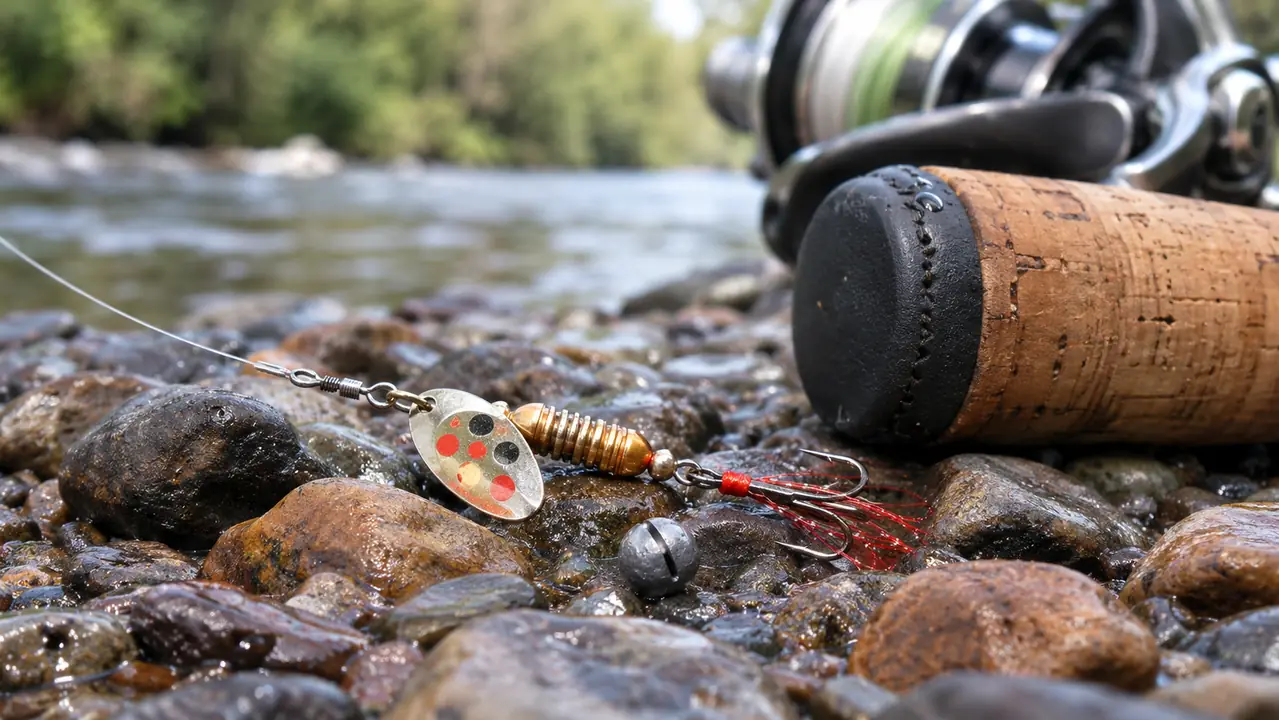
Bank trout eat small things. A 5 foot light-power rod is built for small things, so do not overload it with a heavy lure or a big bait ball. My first choice is a 1/16-ounce inline spinner, cast upstream and brought back just fast enough to keep the blade turning. If the water is off-color, I switch to a small spoon or a piece of worm on a single hook with a split shot a foot above it. The rod is rated for 10-pound line, but I fish 6-pound because the water is clear and the fish are not big.
Rig for the water in front of you, not for the fish you hope to catch. In low, clear summer water, a small spinner and a long cast from ten feet back will beat a heavy rig every time. In high, cold spring water, a split shot and a worm fished slow along the bottom will find fish that will not chase. Carry a small box with a few spinners, a few hooks, split shot, and a couple of spoons. That is enough for a morning. The Ugly Stik kit does not need a tackle store behind it.
Tie directly to the lure with a simple improved clinch knot, or use a small snap swivel if you change lures often. I use a snap on spinners because it lets me swap sizes without retying in the cold. Check the knot by pulling against the reel with the rod bent. If it slips, retie. A bad knot is the most common reason a bank trout comes off, and it is the easiest thing to fix before you make a cast.
Step 4: Cast upstream and mend without spooking fish
Cast upstream and across, then let the current bring the lure back to you. On a small river, the fish are facing upstream. If you cast downstream, you are casting over their tails and they will see you before they see the lure. A short rod makes this easier in tight cover because you can flip a sidearm cast under branches without loading the rod like a fly rod. Keep the cast low and accurate. Accuracy beats distance on a bank every time.
The 5 foot length is an advantage when you are standing in alders or fishing a cutbank with brush behind you. A longer rod would cast farther, but it would also catch every branch on the back cast and force you to stand in the open. I would rather make a 25 foot cast from cover than a 50 foot cast from the middle of the gravel bar where every trout can see me. The two-piece design also means the rod comes apart and goes behind the truck seat, so it is with me when I stop at a river on the way home.
Mend the line before it drags. After the lure lands, lift the rod tip and flip a small loop of line upstream so the current does not bow your line and pull the lure faster than you want. You do not need a perfect mend. You need to buy two or three seconds of natural drift. Most bank trout are caught in that short window when the lure is moving with the current instead of against it. Watch the line where it enters the water, not the lure. The take often shows there first.
Step 5: Hook, play, and land from a sloping bank
The take on a small river is often a tap, not a smash. Set the hook by lifting the rod, not by swinging for the fences. A light-power rod does not need a hard hookset, and a hard swing on 6-pound line will either pull the hook or break the line. If you feel weight, lift. If you feel a tap and then nothing, reel down and see if the fish is still there. Trout will sometimes hold a small spinner and follow it before they commit. Do not set the hook on the first tap unless you feel the fish.
Keep the rod bent and the line tight, and let the rod absorb the short runs. A bank trout does not need to be horsed. Point the rod tip upstream or across the current, whichever keeps the fish off balance, and use the current to tire it. If the fish runs toward a rock, apply side pressure instead of lifting the tip. The 5 foot rod is short enough to steer a fish around a rock at close range, which is where most bank fights happen. Keep your feet still and your net low.
Landing is where a lot of fish are lost. Slide the fish onto a shallow gravel edge instead of lifting it with the rod. If you are on a steep bank, walk it to a low spot before you reach for it. Wet your hands if you are releasing it. Do not beach a trout on dry rocks and then kick it back. A quick release with the fish in the water is better for the fish and better for the next angler. I carry a small net when the bank is high, and I use it more than I use the rod to land fish.
Mistakes I made so you do not have to
The first mistake I made for years was fishing the pretty water. The deep pool at the bend looks like it should hold trout, and it does, but the fish there see every angler on the bank. The better water is often the narrow seam ten feet off the gravel where nobody bothers to cast. The second mistake was using too heavy a lure for the rod. A light-power rod will cast a heavy lure, but it will not load right, and you will lose accuracy.
The third mistake was standing on the skyline. Trout are built to watch for birds and anglers. If your silhouette is above the bank, they see you before you see them. Stay low, keep your shadow off the water, and approach the edge from the side. The fourth mistake was changing lures too fast. A spinner that has not produced in five minutes is not necessarily wrong. Slow down, change the angle, and fish the same seam twice before you tie on something else.
The fifth mistake was treating the reel like a winch. On a light rod, you do not crank a fish to the bank. You let the rod bend and the current work, and you take line only when the fish gives it. I burned more time untangling backlash and pulling hooks by cranking too hard than I ever saved. Slow down. The fish is not going anywhere fast in a small river, and the rod is doing the work if you let it.
What else helps
A pair of polarized glasses will do more for your bank fishing than any new lure. They cut the glare and let you see the seam, the rock, and sometimes the fish. I wear them even on gray days because the glare is still there. A small net helps on high banks. A pair of forceps helps with hooks. None of this needs to be expensive. The goal is to see more and handle fish better, not to fill a vest.
Watch the weather and the water. Trout move shallower when a cloud bank rolls in, and they pull back into cover when the sun is high and bright. A morning after a light rain is often better than a bluebird day. If the river is rising and muddy, go home or find a spring creek. If it is falling and clearing, fish the edges. Carol sometimes comes with me and reads a book on the bank while I fish. She has seen more fish caught in the first hour after a rain than in a whole sunny afternoon.
Keep the Ugly Stik kit simple and keep it ready. I do not carry a big tackle bag to the bank. I carry one small box, a net, and the rod. If I am fishing a new stretch, I walk it without casting first and look for seams and cover. Then I go back to the best one and fish it slowly. That habit has caught me more trout than any lure change. The rod is short, the box is small, and the walk is the part that finds fish.
A five foot rod does not need to cast across the river. It needs to put a small lure in the one seam ten feet off the bank where the trout are actually sitting.
One short outfit, one small box of tackle, and a bank you can read
The 5 foot Ugly Stik spinning kit is the rod I keep behind the truck seat. Two pieces, 16 ounces, and simple enough to fish in the rain.
Amazon Check Today's Price on Amazon →