
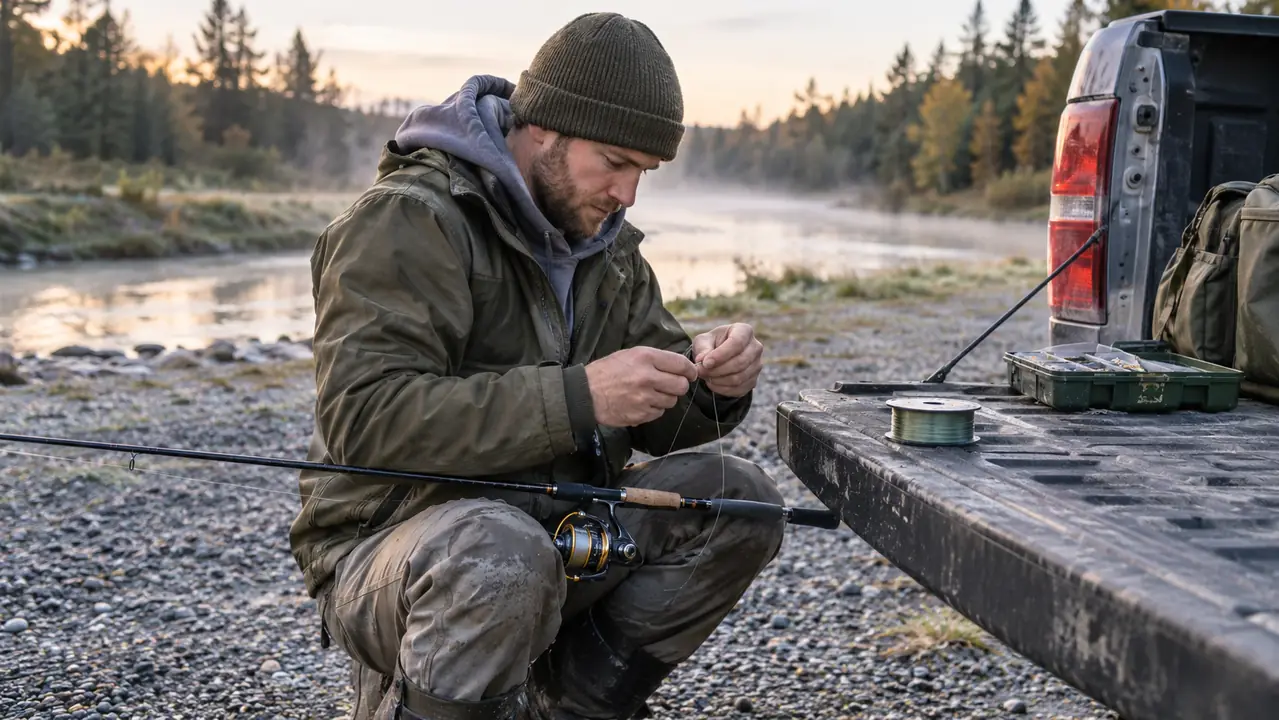
Braid does not forgive a sloppy spool. I found that out on a bass lake south of Spokane one June, when a fresh spool turned into a nest on my third cast and I spent twenty minutes on my knees in the boat picking it apart while the light went off the water. The line was fine. The way I put it on was not. Braid has no stretch and almost no memory, so whatever you do to it while loading it stays done. Load it loose and it will dig into itself on the first hard hookset. Load it with a twist and you will fight wind knots until you cut the whole thing off and start over.
I have spooled a lot of line since that June, on everything from a small trout reel to the reels I keep for walleye, and the job itself has not changed. Most of my reels now carry KastKing Superpower braid in 20 pound test, 300 yards to the spool, and I have loaded enough of it that I do the steps below without thinking about them. What I have learned is that almost every braid complaint an angler brings to the ramp, the wind knots, the digging, the line that snaps above the knot, traces back to the ten minutes the line spent going onto the spool. Get those ten minutes right and braid is the easiest line there is to fish. Here is the whole job, start to finish, the way I do it on my tailgate.
The line I load on every reel that sees real water
KastKing Superpower braid, 20 pound test, 300 yards. Small diameter, zero stretch, and it holds a knot. I keep a spare spool in the toolbox so a cut-down reel never ends a trip.
Amazon Check Today's Price on Amazon →Spooling Braid, Step by Step
Step 1: Match the line to the reel and to the fish
Twenty pound braid is my general purpose line and it is where I would start anyone who fishes the way I do. The diameter is small enough to throw a light jig a long way and the strength is there when a walleye sucks it in at the boat or a bass buries itself in the weeds. I buy it in 300 yard spools and a spool does two reels with a little left over for the next fill.
The reel matters as much as the line. Twenty pound braid is stronger than most freshwater rods can load, so the drag is what protects everything. I set mine so line comes off the spool under a steady pull at roughly a third of the line's rating, then I leave it alone and fight the fish with the rod. Locking the drag down because the line is strong is how you straighten hooks and break rod tips in the same afternoon.
For trout on the small rivers I drop down to a lighter braid. It casts better on a light rod, it still handles a fish that runs, and it does not overload the guides. The point is not to buy the heaviest line that will fit the reel. The point is to pick the line that matches the rod in your hand, then spool it properly so the rating on the label means something on the water.
Step 2: Put a backing on the spool first
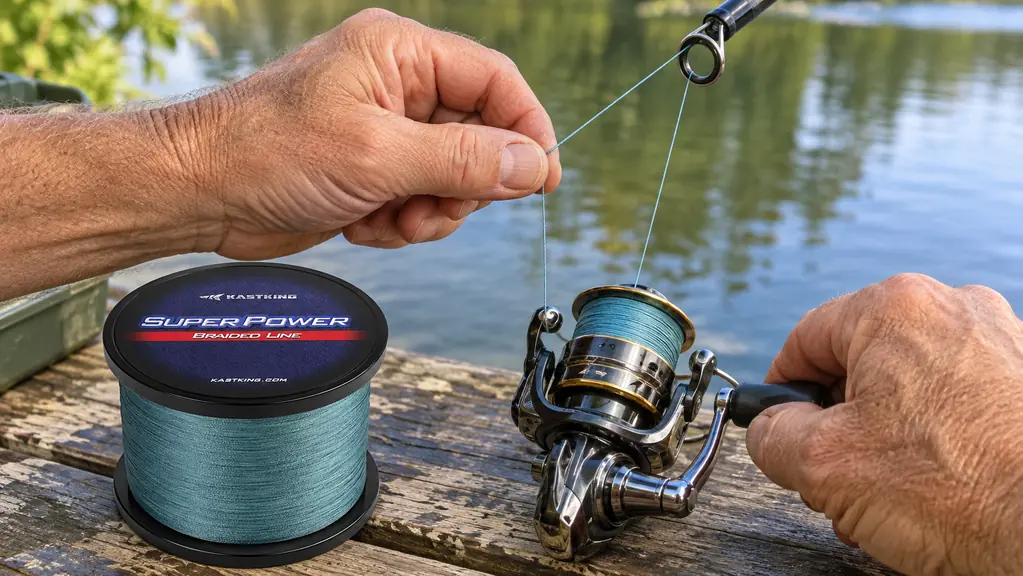
Braid will slip on a bare metal spool. It has no stretch and it is slick, so under a hard pull the entire spool of line can rotate on the arbor. When that happens you lose your drag setting and your line tension in the same moment, usually with a good fish on. The fix costs almost nothing. Wind on 10 or 15 yards of monofilament before the braid ever touches the reel.
I tie the mono to the spool with an arbor knot, snug it down hard, and wind it on under tension so it spreads across the width of the spool. Then I join the braid to the mono with a double uni, six wraps on each side, pulled down wet and trimmed close. Some people tape the arbor instead, and that works fine on a reel you do not plan to reline often. I like the mono because it gives the braid something to bite into for the whole fill.
The backing does a second job. The bottom of a spool is line you will never fish, and there is no sense filling it with the good stuff. Fifteen yards of mono takes up that space, the braid sits on top where it actually does the work, and the fill runs out evenly instead of leaving you with half a spool of line you paid for and cannot reach.
Step 3: Run the line through the guides before you tie anything
This is the step people skip and then blame the line for. Open the bail, run the tag end of the braid up through every guide on the rod, and only then tie it to the spool or to the backing. Tie first and thread second and you end up with a loop of line wrapped around the rod and a twist worked into the spool that no amount of casting will get out.
Braid is slick, so every knot needs more wraps than you would use with mono, and it needs to be pulled down wet before you trim the tag. A knot that looks snug on braid usually is not. I wet the knot, pull it down until it seats, then pull once more with both hands before the scissors come out. A Palomar is what I tie at the lure end, and a double uni is what I tie anywhere two lines meet.
Close the bail with your hand, not by turning the handle. Cranking the bail shut is how the first twist goes into a new spool, and it is a habit worth breaking on the first crank as much as on the ten thousandth. It takes a half second to flip it over with a finger.
Step 4: Load it with the filler spool flat and the line under tension
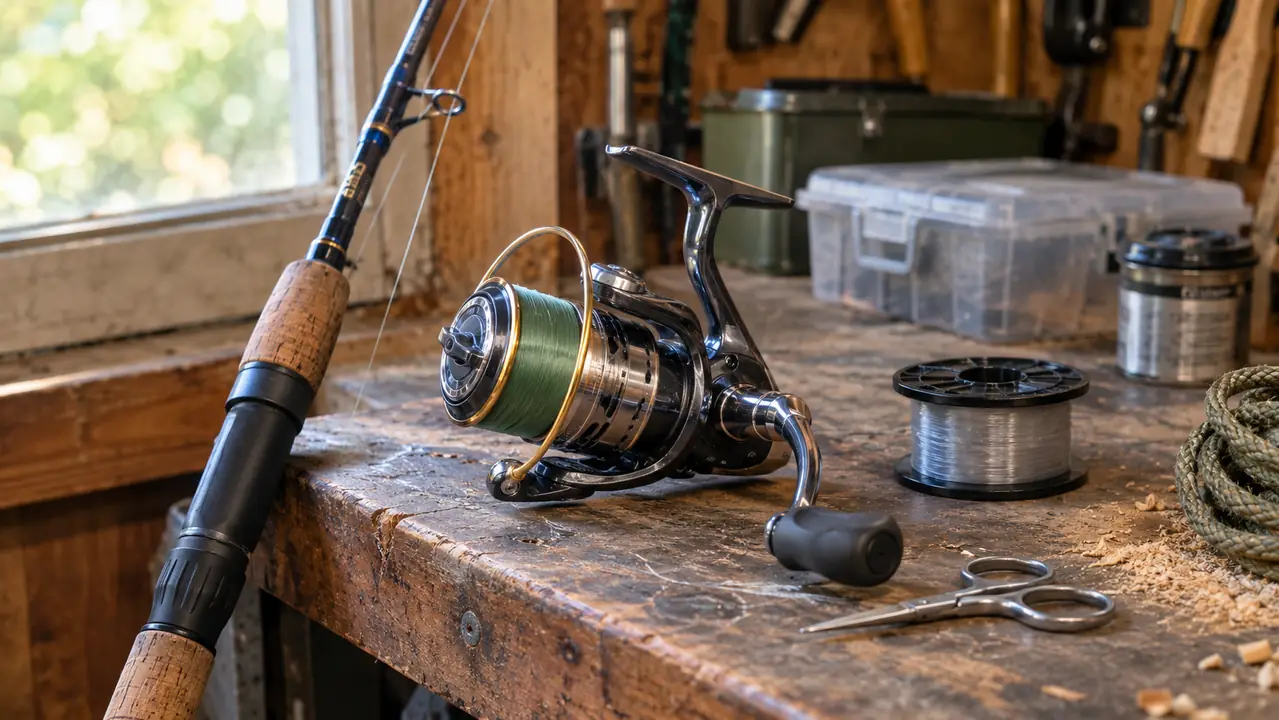
Lay the filler spool on the floor or the tailgate, flat, with the label facing up. Hold the rod tip up a little and crank slowly. The line should come off that filler spool in the same direction the reel is winding it on. If it goes on the other way you are putting a half twist into every turn, and you will find out about it on the first cast that leaves the rod.
You can feel the twist before you can see it. Pinch the line between your thumb and forefinger about a foot above the reel and crank ten turns. If the line between your fingers wants to roll over on itself, flip the filler spool over and try again. If it stays flat, you have it right. That test takes fifteen seconds and it has saved me a whole spool more than once.
Tension is the other half of the job. I keep a steady pinch on the line the whole time I am cranking, firm enough that it packs on even, not so tight that my fingers ache. Braid does not stretch, so the tension you put in during the fill is the tension that stays. Loose coils on the spool are exactly what digs in and jams when a fish loads the line. When Carol comes along she holds a pencil through the spool and adds drag with her thumb, which is easier on my hands and quicker besides.
Step 5: Stop an eighth of an inch short and break the spool in
Fill to about an eighth of an inch below the lip of the spool and stop there. Overfilled braid throws loose loops off the spool on the cast, and those loops come back as wind knots. Underfilled costs you distance and makes the reel work harder than it needs to. The lip is your gauge. When the line is close enough that a thin bright ring of spool still shows, you are done.
Then get to open water, tie on nothing or a plain weight, and let 60 or 70 yards out behind the boat. Reel it back in under steady pressure with the line pinched between your fingers. That sets the line evenly on the spool and finds any loose wraps before a fish does. Fishing from the bank instead, I walk the line out across a lawn or a quiet stretch of shoreline and wind it back the same way.
Check it on the first real trip out. If the line is sitting in loose coils or you feel it catch when a fish pulls, strip 20 yards off and respool that much under tension. Braid takes a set in the first hour of fishing and then it behaves for the rest of the season. That first hour is worth paying attention to.
What Else Helps
Set the drag to the line, not to your mood. KastKing backs this braid with a lifetime warranty, and it will still break at the knot if you lock the drag down and lean on a fish. Something around a third of the line's rating is plenty for bass and walleye, and it keeps the rod in one piece when the fish makes its last run at the boat.
Carry a real pair of line scissors. Braid will not cut clean on a nail clipper or a dull pocketknife, and a frayed tag end is a knot waiting to fail. Clean cut, wet knot, pulled down hard, every single time. It is the cheapest habit in fishing and the one that saves the most fish.
If the water runs clear, add a leader. Six to eight feet of fluorocarbon joined to the braid with a double uni gives you the invisibility braid does not have, and it means you replace a leader when it gets scuffed instead of respooling the whole reel. I check that leader after every fish that drags me into rock.
Last thing. Rinse the reel with fresh water after a muddy day and let it dry with the drag backed off. Braid holds grit in the weave, and grit in the weave is what grinds a guide and chews a level wind. Ten minutes of care at the tailgate buys you a spool that fishes the same in October as it did in May.
Braid does not stretch, so the tension you put in during the fill is the tension that stays.
One spool, loaded right, fishes all season
KastKing Superpower braid in 20 pound test, 300 yards. Small diameter, zero stretch, strong knot strength. Back the spool, load it with tension, and stop an eighth of an inch short.
Amazon Check Today's Price on Amazon →