
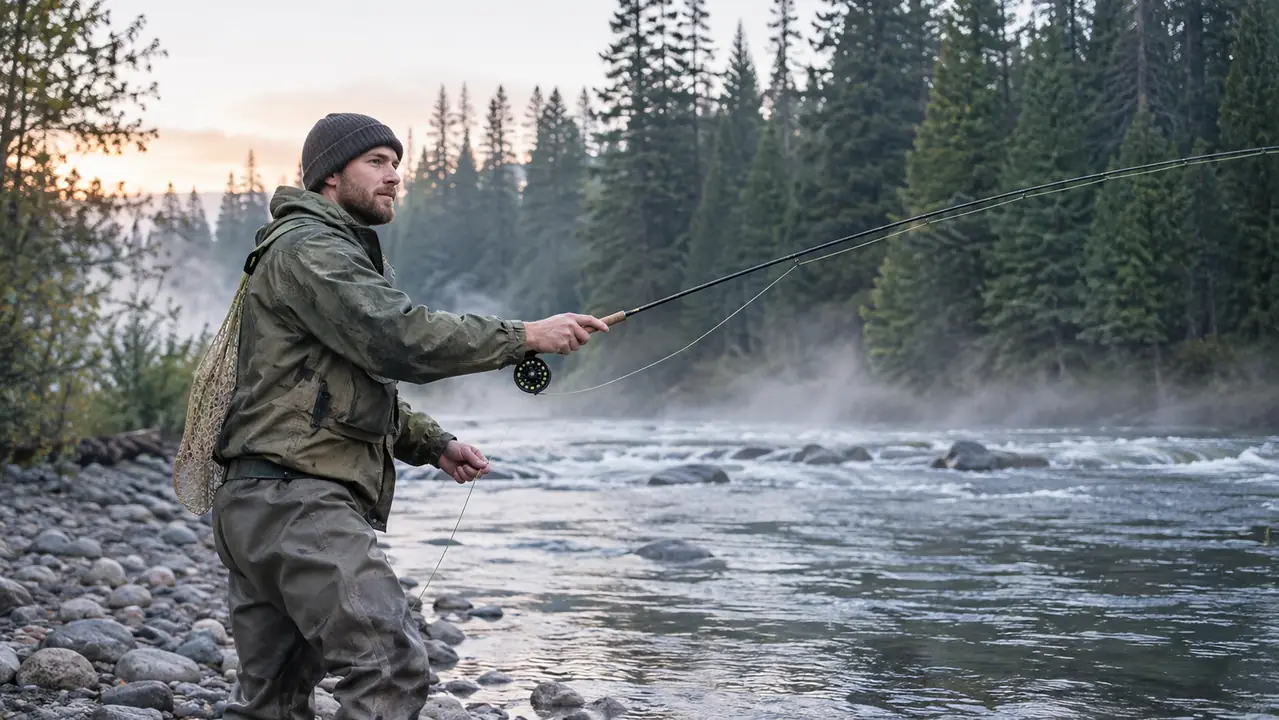
Two springs back I bought the 5-foot Ugly Stik spinning kit for the least romantic reason on the shelf: my son Jake kept borrowing my good rod, and I wanted something that could live behind the truck seat without me fussing over it. Since then it has been on the Spokane River after trout, on a handful of bass lakes, in the 14-foot aluminum boat with the small outboard, and in the bed of a pickup that has seen better decades. Carol has used it twice when the trout were rising and she wanted to fish instead of watch. That is enough time to have real opinions instead of package copy.
This is the honest version. The Ugly Stik combo is a genuinely useful little rod and reel, and there are three things about it that will bother a certain kind of angler before the first weekend is over. Both of those are true at the same time. Most write-ups pick one side and run with it, which is why so many of them read like they were written by somebody who never got the rod wet.
The Quick Verdict
A tough little 5-foot light spinning kit that is happiest on small rivers, farm ponds, and bank trips. Worth owning for the job it actually does, and not worth forcing into a job a short light rod was never built for.
Amazon Check Today's Price →The rod that lives behind my truck seat and keeps earning the spot
Two seasons, small water, no babying. If that is the job you need done, this kit does it without asking for much.
Amazon Check Today's Price on Amazon →How I've Used It, and What That Covers
I spooled it with 6-pound monofilament, mostly because that is what the reel is set up to hold and partly because mono is forgiving on a light rod when a fish makes a run. The first trip was a cold Saturday in April on a brushy stretch of river where the bank is steep and every cast is a short flip. The water was high and the color of coffee with too much cream in it, so I tied on a small dark jig and flipped it tight to the bank. Third cast, a twelve-inch rainbow took it before the jig had fallen a foot. That is the water this rod was built for, and it did not embarrass itself. The second season it went into the boat for bass and panfish, and it has turned into the rod I hand to somebody who wants to fish but does not want a lesson.
Most of my fishing is from the bank or from a small aluminum boat, so a rod that breaks into two pieces and stores flat behind a seat matters more to me than a rod that casts forty extra feet. I have not babied this one. It has been rained on, laid in gravel, stepped over, and left strung up in a holder while I ate a sandwich. The two-piece joint has stayed snug through all of it, and the guides have not grooved or shed an insert. For the way I actually fish, that is most of the battle.
The blank is what Ugly Stik calls Ugly Tech construction, and the tip is the clear tip design the listing names. I am not going to pretend I know what is inside that blank. What I can tell you is that the tip has not broken, the rod has not taken a set, and it still casts straight enough for a 5-foot rod. That is the only honest claim I can make about the materials, and it is the one that matters after two seasons.
What Nobody Tells You Before You Buy
Five feet is short. Shorter than you think, even after you read the number and nod at it. On a brushy bank where every cast is a flip under a branch, short is an advantage and you will be glad for it. On a lake where the fish are sitting twenty or thirty yards out, you will feel the limit on the first cast. Distance costs length, and no amount of technique buys it back. If most of your fishing happens on big open water, this is the wrong tool and it is not close.
Light power is the second thing. The rod is rated to 10-pound line and the reel holds 240 yards of 6, which tells you the whole story right there. This is not a rod for flipping into lily pads or dragging a fish out of a laydown. It is a rod for small lures, light line, and fish that fight instead of dive. I have landed bass in the two-pound range on it and enjoyed every minute. I have also been broken off by something in the weeds that I never saw, and that was not the rod's fault. It was mine for asking. That happened in June on a lake south of town, with a worm pitched into a weed edge I had no business fishing on 6-pound line. Whatever took it went under the weeds and stayed there. I tightened the drag because I did not know better at the time, and the line popped at the knot. Ten minutes and one lost lure later, the lesson had sunk in.
The reel is the part nobody talks about, and it is the part I would point at first. It is serviceable. It is not smooth the way a reel that costs more than this whole kit is smooth, and after two seasons of bank work mine has a little more handle play than it did new. The 5.2 gear ratio is a sensible working ratio rather than a speed reel, and the ambidextrous handle means a left-handed kid and a right-handed guest can both fish it inside of ten seconds. On a family trip, that is worth something.
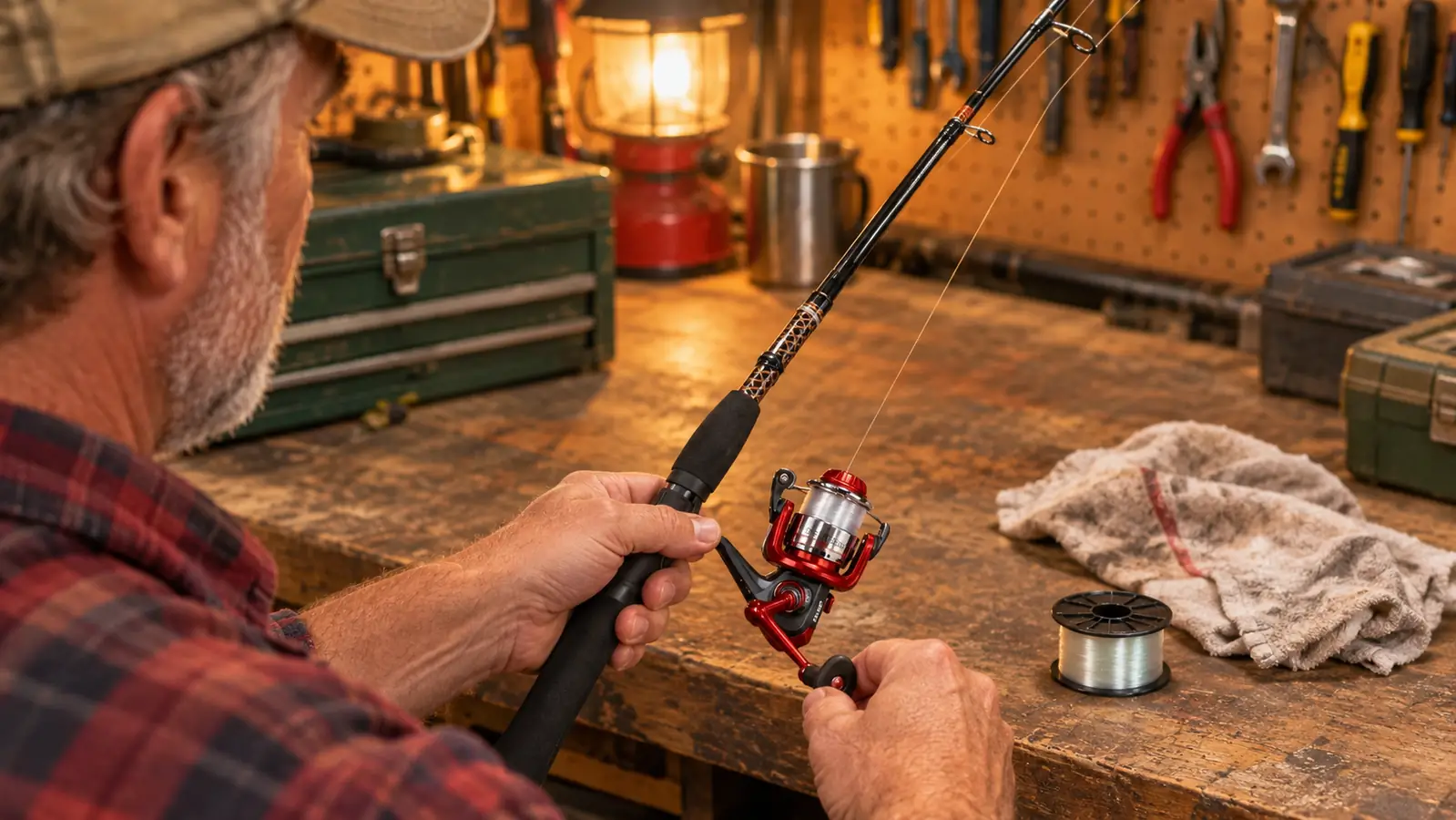
What nobody tells you is that this is a kit you will want to re-spool sooner than you expect. Monofilament on a small spool takes a set if it sits in a hot truck bed all summer, and once it starts coming off in coils your casting falls apart. Change the line every season and the outfit performs like something twice as serious. Skip that step and you will spend a morning blaming the rod for something the line did.
One more detail worth knowing before you order. The listing calls it a complete spinning kit and names the rod and reel as the included components, which is accurate as far as it goes. What it does not include is line or a lure, so plan on a spool of mono and a small box of jigs before your first trip, or you will be standing at the water with a bare spool. I have watched a grown man do exactly that and I did not have the heart to laugh where he could hear me. Now I keep a spare spool of 6-pound mono in the truck box, which solves the problem for me and for whoever forgot theirs.
The rod has never once been the reason I lost a fish. The reel has been the reason twice, and both times I was asking a light kit to do something it was never built to do.
Where the Short Light Rod Earns Its Keep
Small rivers and creeks are the whole reason this rod exists in my truck. Underhand flips under alders, short roll casts into a seam behind a rock, a quick pitch to a rising trout with no room for a backcast. A long rod in that water is a nuisance and a snag waiting to happen. At 5 feet, the kit fits in gaps a longer rod cannot find, and the light tip loads with enough feel that you know what the current is doing to a small jig. There is a stretch on a creek north of me where the alders meet overhead about eight feet up and the only cast available is a sidearm flip of maybe fifteen feet. My longer rod snags a branch there about one cast in four. This one has never snagged a branch on that stretch, because it does not need the room.
The other job it does well is handing it to somebody else. The whole outfit is 16 ounces, so a kid or a guest can hold it all morning without their arm giving out, and the ambidextrous handle means I am not explaining which hand goes where. Carol does not fish much and she does not want a lesson when she does. She takes this rod, casts where I point, and catches trout. That is the highest compliment I can pay a piece of gear.
Around docks and along riprap it is a pleasant little outfit for panfish and school bass. Small jigs, a little spinner, a weightless worm pitched at a shadow line. You feel a bluegill tap it, and you feel it because the rod is light and short and there is not much material between your hand and the fish. That sensitivity is not marketing talk. It is what happens when you cut two feet off a rod and drop the power rating.
Where It Falls Down
Wind is the first enemy. A 5-foot light rod with a light lure cannot punch through a crosswind, and on a gray afternoon on open water you will find yourself watching the lure land well short of where you wanted it. I have had days where I gave up and switched rods, not because anything failed, but because the tool was wrong for the conditions. There was an afternoon last October on a lake with a west wind coming across three miles of open water, and I spent twenty minutes trying to put a small spinner where the fish were busting shad. The casts landed somewhere between fifteen and twenty-five feet, never twice in the same place. I walked back to the truck and got the longer rod out. Nothing about the Ugly Stik had failed. It was simply the wrong length for a day like that, and I knew it going in.
The reel is the second. Mine has developed a little play in the handle, and the drag is not what I would call refined. You can set it by feel and land fish, but there is a small range between too tight and too loose that takes some learning. I tried braid on it one season and went back to mono, because the reel and the short light blank were happier with line that stretches a little. If a smooth drag matters to you more than anything else, spend your money on a reel first.
The third thing is that you have to play the fish. A light rod and 6-pound line do not give you the option of horsing a bass over the gunwale. Get impatient and you will lose fish, or worse, you will high-stick the tip trying to lift something it should not lift. I broke exactly one tip in my life doing that, on a different rod, and I have not done it since. Treat this kit with ordinary sense and it will last. Treat it like a winch and it will not.
What I Liked
- The blank takes a beating and keeps casting straight, which is the whole point of buying this name
- Two-piece build stores flat behind a truck seat or under a boat bench
- 16 ounces all in, so a kid or a guest can fish it all morning
- Ambidextrous handle suits right and left-handed anglers without swapping anything
- 5-foot length is genuinely useful in brush, blowdowns, and tight banks
- Manufacturer's warranty backs the rod if something fails that should not have
Where It Falls Short
- The reel is the weak link, with a drag that takes real learning to set by feel
- Short length costs casting distance on open water, especially into wind
- Light power and a 10-pound line rating rule out heavy cover entirely
- No line included, so you are buying a spool before the first trip
- Mono on a small spool takes a set fast in a hot truck, so re-spool every season
Keeping It Alive Through the Winter
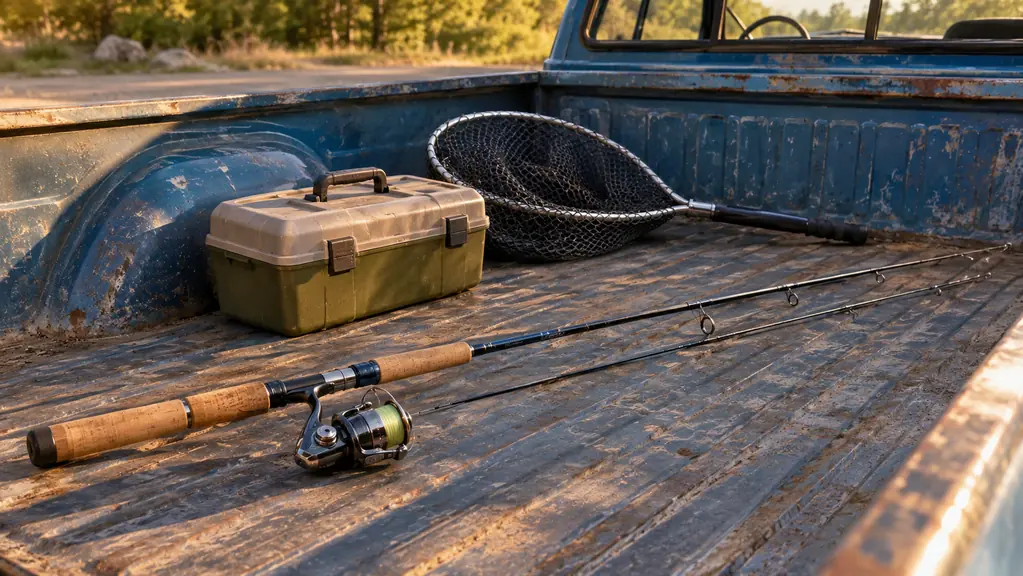
My winter routine for gear is not complicated and it does not take an evening. I strip the line off this reel in November, because old mono sitting on a spool for four months will remember every coil it learned. I wipe the rod down with a damp rag, check the guides with a cotton swab to see if anything catches, and stand the two pieces in the corner of the shop rather than leaning them against something that will put a bend in the tip. That is the entire program.
The reel gets a drop of oil where the handle turns and nothing more. I do not take reels apart. I have a friend who does, and he has a coffee can of parts he cannot put back together, which cured me of the habit years ago. If a reel starts grinding, I either live with it or replace it, and on a kit like this that is a reasonable way to think. The rod is the part worth protecting. The reel is the part you upgrade later if you decide you like the setup.
Come spring, I spool fresh 6-pound mono, tie on a jig, and take it to the river to see if anything changed over the winter. Nothing ever has. That is not a knock on the kit. It is the reason I keep it. Gear that behaves the same way every April is gear you stop thinking about, and the best compliment I can give anything in my truck is that I forget it is back there until I need it.
Who This Is For
This kit fits the angler who fishes small water and knows it. Creeks, farm ponds, the brushy bank down the road, a dock on a lake you can walk to. It fits the person who wants one outfit behind the seat that they do not have to think about, who would rather fish a short accurate cast than a long hopeful one. It fits a parent handing a rod to a kid, and it fits a grown adult who has been fishing thirty years and still enjoys catching a bluegill on a light tip. If you want a rod to learn on without spending like you are committed, this is a sensible place to start.
Who Should Skip It
Skip it if your water is big. If you are fishing the broad stretches of a reservoir, casting to schooling fish a long way off, working heavy cover, or throwing anything heavier than a light lure, this rod will frustrate you and you will blame the rod instead of the choice. Skip it if a smooth drag is the thing you care most about, because that is not where the money went here. And skip it if you want one rod to do everything, because no rod does everything, least of all a 5-foot light one.
If your fishing looks like mine, this is the kit that matches it
Small rivers, bank trips, a rod behind the seat that does not need looking after. Check the current listing and see if the 5-foot light setup lines up with the water you actually fish.
Amazon Check Today's Price on Amazon →