
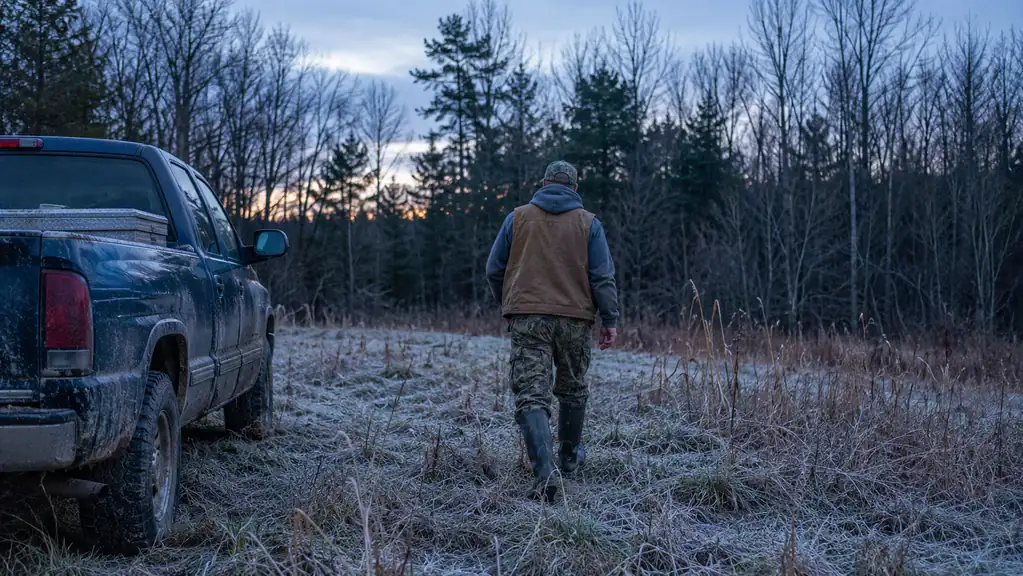
The first thing nobody tells you about a budget trail camera is that it will miss animals. Not every animal. But enough that you should know it before you strap one to a tree. I ran the WOSPORTS Mini Trail Camera on a game trail above a creek drainage in eastern Washington from late August into December, and then again through spring turkey season. It caught deer I never would have seen from the truck. It also missed a buck that walked past at nine yards in broad daylight, and I know that because I watched him do it from a stump forty yards uphill.
That is the honest shape of this thing. The WOSPORTS is a small, simple, battery-powered camera that writes photos and video to an SD card. It is not cellular. It will not text you a picture of a deer while you are at work. You walk in, you pull the card, you look at it on a laptop, and you walk back out. For a public-land hunter who is already walking in twice a week in October, that rhythm suits me fine. If you want your scouting to arrive on your phone, stop reading here and go look at a cellular unit instead.
The Quick Verdict
A small, light, honest scouting camera. Daylight photos are strong, night work is adequate, and it misses animals when you place it lazily. Buy it for the job it does, not for the job a cellular camera does.
Amazon Check Today's Price →If pulling a card is already part of your season, this is the camera to hang
Same weight in the pack as a water bottle, same routine every trip. Walk in, pull the card, walk out. Check today's price and see what the current listing includes.
Amazon Check Today's Price on Amazon →The Short Version, Before the Details
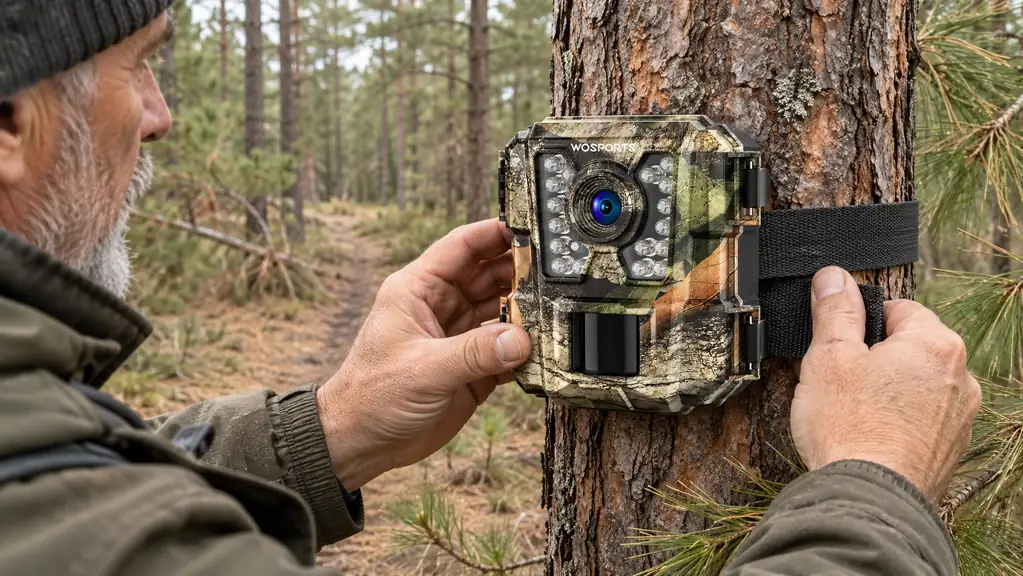
Here is what WOSPORTS lists and here is what I found. Photos are 30 megapixels and video is 1080P. A PIR motion sensor runs the trigger and 850NM infrared handles the night work. The body is ABS plastic, listed as water resistant, and measures 4.25 by 4.21 by 3.43 inches. It weighs 11.68 ounces, light enough that I stopped noticing it in the pack by the second trip. It is battery powered, the controls are push buttons, and everything stores on an SD card. There is a strap with a threaded insert so it can go on a tree or a wall. That is the whole machine.
What that list does not tell you is where a camera like this gets hard. Megapixels are cheap now. Trigger timing and placement are what decide whether you get a photograph of a deer or a photograph of the back half of a deer leaving. I have run four cameras on that same ridge over the years, and the one that fills a card with usable frames is almost never the one with the biggest number printed on the box.
The other thing the listing does not say out loud is that the compact part is the actual feature. A camera you resent carrying is a camera that stays in the truck. This one rides in the top pocket of my pack next to a water bottle and I forget it is there, which means I hang it in places I would not bother with a full-size box. That is worth more on public land than another ten megapixels.
How I Tested It
I hung it with the included strap on a pine about fourteen inches across, roughly waist high, angled across the trail rather than down it. The trail runs along a bench above a creek drainage where mule deer and whitetail both move through, and turkeys roost in the timber above it. Waist height on that slope put the lens about three feet off the ground on the uphill side, which is the height that has worked best for me over the years on this kind of ground.
I pulled the card every seven to ten days, which is about as often as I get out during the season. I logged the date, the time, and what the camera caught. Not a formal study. A notebook in the truck and a pen that did not always write in the cold. But it was enough to see the pattern, and the pattern is what this review is actually about.
Across roughly three and a half months of fall and another two months in the spring, the camera produced a few thousand files. Most of them were empty frames triggered by moving grass, a swinging branch, or heat coming off rock in the afternoon. That is not a knock on WOSPORTS. It is what trail cameras do. What I counted were the usable frames, the ones with an animal in them, and how often the camera got the whole animal instead of a piece of one.
The buck that walked past at nine yards in daylight never made the card. That is the cost of a flat angle and a late trigger, and it is the first thing I would tell a new buyer.
The Trigger Is the Whole Ballgame
By the standards of a camera in this range, the trigger is not slow. Daylight photos of animals moving at a walk came out framed and sharp. A doe and two fawns feeding through for twenty minutes gave me a clean sequence, and the 30MP files held up when I zoomed in on the fawn's ear to check for a tag. That is the good news, and it is most of what I want from a scouting camera.
The bad news is the edge cases. That nine-yard buck came through at a steady walk in the middle of the morning and the camera gave me one frame of empty trail. My guess, and it is only a guess, is that the angle was too flat to the trail and the sensor caught him late. A PIR sensor watches for a change in heat crossing its view. When an animal moves across the edge of that view instead of through the middle of it, you get a trigger that arrives half a second late or not at all.
What I changed after that was placement, not the camera. I moved it back off the trail and angled it across, so an animal walking through crosses the sensor's view instead of approaching it head on. I cleared the grass in front of the lens with a boot. The misses dropped off. Not to zero, because trail cameras miss. But the difference between a lazy angle and a deliberate one is bigger than the difference between two cameras in this price range.
Night Video: What 850NM Actually Looks Like
The infrared is 850NM, which means it gives off a faint red glow when it fires. Deer do not seem to care much in my experience, and I have never had a camera spook an animal in a way I could prove. What you get at night is black and white. The reach is honest for a compact unit, roughly thirty feet in my setup before the image turns to soup. At fifteen feet it is clear enough to count points on a buck, and clear enough to tell a coon from a porcupine.
Night video eats card space fast and the 1080P files are big. I ran video for two weeks and then went back to photos. For scouting, a photo tells me what I need, which is what walked through and when. Video tells a better story but it costs card capacity and battery, and it costs you time when you finally sit down to review. If you want video, run it on a short window around dawn and dusk instead of all night.
Batteries, Cards, and the Part Nobody Mentions
The camera is battery powered and it lives outdoors through temperature swings that would make a phone quit. Cold is what kills batteries. Eastern Washington in November gets cold enough that I swapped cells more often than I did in September, and the camera gave me no signal I would trust before it quit. It simply stopped. I learned to check the file dates before I walked away from it, so I would know the last time it was actually working.
Card capacity matters more than people think at 30MP, because those files are large. I ran a 32GB card and pulled it every week, and I was never close to full. If you plan to leave a camera out for a month on video, buy more card than you think you need. Clear the card before the season starts, not the night before opening day, because that is the mistake that cost me a week of frames one September.
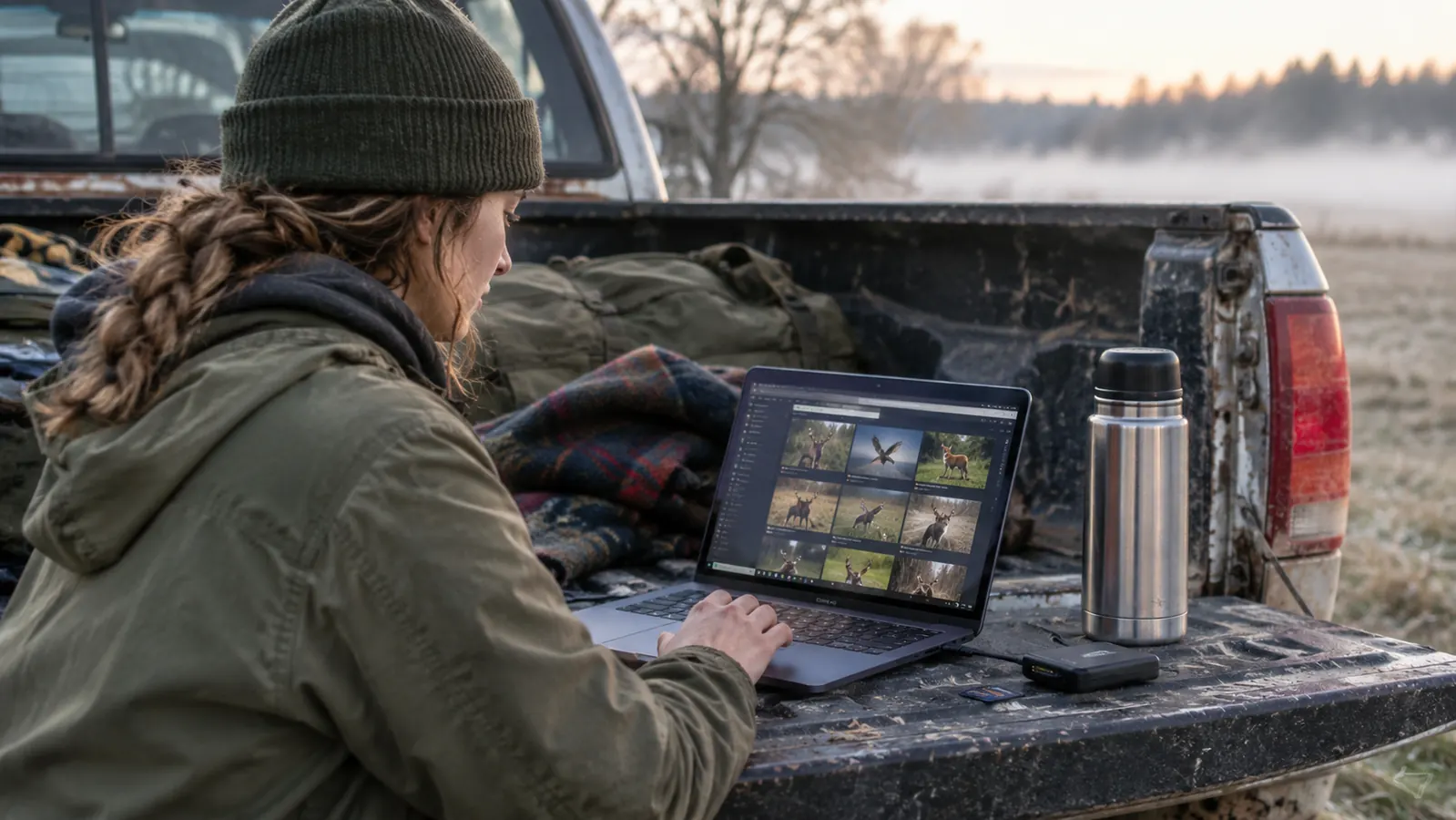
The review workflow is the part that decides whether you will actually use this camera. Pull the card, put it in the laptop, scroll through a few hundred thumbnails, delete the grass. Fifteen minutes at the kitchen table with coffee. Carol has asked me more than once why I do not just get one that sends pictures to the phone, and the answer is that I like walking the ground. Pulling a card is an excuse to be out there.
Mounting, Weather, and a Winter That Tried
The mount is a strap and a threaded insert on the back, listed as tree mount and wall mount. The strap held fine through wind and one ice storm. I backed it up with a small lock through the strap, not because I have had one stolen but because public land is public land. The ABS enclosure is listed as water resistant and not waterproof, and that distinction matters. Mine sat through rain and snow with nothing inside. I would not leave it standing in a puddle.
The one failure I had was condensation. In a hard freeze followed by a thaw, the lens fogged on the inside for about a day and the morning frames came out soft. It cleared on its own. Opening the case to swap a card in wet weather is how that happens, so I started doing my card swaps in the truck instead of standing over the camera in the rain with the door open.
What I Liked
- Daylight photos are sharp and the 30MP files hold up when you zoom
- Light at 11.68 ounces and small at 4.25 by 4.21 by 3.43 inches, so it disappears in a pack
- Simple push button setup with no account, no app, and no subscription
- Held up through rain, snow, wind, and one ice storm on the strap it came with
- 850NM infrared gives usable black and white frames out to about thirty feet
Where It Falls Short
- No cellular link, so pictures wait on the card until you walk back in
- Misses animals on a flat angle to the trail, and the miss is silent
- Battery quits without a signal you can trust in cold weather
- Night video fills a card fast, so video is a short-window tool at best
- Lens fogged on the inside once in a freeze and thaw cycle
Where the 4.2 Stars Comes From
The rating on this camera sits at 4.2 across more than 3,500 reviews, and that reads about right for what it is. People who bought it wanting a small camera that takes decent daylight photos and passable night photos are mostly happy. People who bought it expecting it to push pictures to a phone are not, and a share of the one-star reviews read like the buyer never got past the first photo in the listing.
The other chunk of complaints I read were about missed triggers and battery life in cold. Those are real. I hit both. I would rather tell you that up front than pretend a budget camera behaves like a premium one. The camera is a tool, and it performs like a tool in its range. Knowing that going in is most of the battle, and it is the reason I still have mine hanging on a ridge above the creek.
Who This Is For
This is for the hunter who walks in from the truck and wants to know what is using a ridge without paying for a cellular subscription all year. Public-land whitetail and mule deer scouting, spring turkey, a bear working a bait site, a fence line on the back of the property. It suits someone who already carries a laptop and a card reader and does not mind fifteen minutes at the kitchen table before bed. That is who WOSPORTS built this for, whether or not the listing says it that plainly.
It is also a good fit for the angler who wants to see what walks the bank at night, or for a landowner keeping an eye on a gate. Small, light, easy to tuck against a trunk. If you only check it once a month, it will do that, as long as you accept that the files wait for you. There is a longer piece on how this camera held up across a full season, and a comparison against a cellular unit if you are weighing the phone-alert tradeoff.
Who Should Skip It
Skip it if you want pictures on your phone. That is the honest line. There is no app here, no cellular link, and no alerts. Skip it if you are running a camera on a property two hours away and you need to know today, not next Saturday. Skip it if you expect a buck at forty yards at midnight to come back as a crisp photograph, because nothing in this range delivers that and the listing does not promise it either.
And skip it if you are not going to place it carefully. I mean that. A camera aimed straight down a trail from head height will disappoint you no matter what you spend. If you will not clear the grass, set the height, and angle across the trail, the misses will be your doing and you will blame the camera. That is the most common way a decent little unit ends up in a drawer.
What I Would Change
Two things, and neither is a deal breaker. I would like a way to know the batteries are still good before I zip the case shut, because in November the camera quit on me and I burned a week of frames before I figured it out. And I would make the card slot easier to work with cold fingers in the dark. Everything else I would leave alone. The size is right, the weight is right, the strap is right, and the daylight photos do the job I bought it to do. A cheap camera should be simple. This one is, and that is more of a compliment than it sounds.
Five months on a public-land ridge, and I am still hanging it
It is a card-pull camera and it is an honest one. If that is the kind of scouting you already do, take a look at the current listing and today's price before you buy anything else.
Amazon Check Today's Price on Amazon →